GEENLAND'S ICE SHEET

ABOUT THE MATERIAL
- A country of ice
- The last glacial period
-
You solve the tasks by using
- Text
- Audio
- Drawing tool
- Images
In the book you can find more information on the subject.
The ice sheet covers 80% of Greenland. If the ice melts it would make up half of the freshwater of the northern hemisphere.
-
How thick is the ice where it is thickest?
-
What is below the ice?
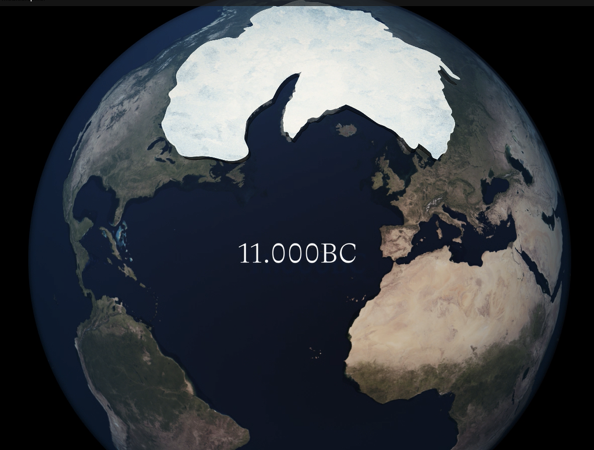
The model shows the extension of ice in the northern hemisphere during the latest glacial period, the Weichselian glaciation.
In glacial periods the ice caps spread over large parts of the globe.
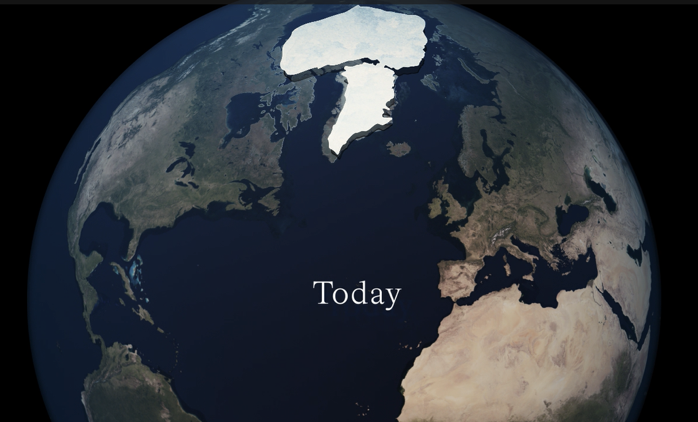
Today it is just 80% of Greenland and the North Pole that are covered by ice.
-
What countries were covered by ice 11,700 years ago?
-
How is it possible to know how the climate was in Greenland during the last 135,000 years? Find help in the book at page 30.
-
Will there be any ice left on Greenland in 100 years? See the movie on the next slide.
The ice sheet covers 80% of Greenland. If the ice melts it would make up half of the freshwater of the northern hemisphere.
-
How thick is the ice where it is thickest?
-
Where does the ice sheet move most – to the west or to the east?
Give reasons for your answer.
The model shows the extension of ice in the northern hemisphere during the latest glacial period, the Weichselian glaciation.
In glacial periods the ice caps spread over large parts of the globe.
Today it is just 80% of Greenland and the North Pole that are covered by ice.
-
What countries were covered by ice 11,000 years ago?
-
How is it possible to know how the climate was in Greenland during the last 135,000 years? Find help in the book at page 30.
-
How many percent of Greenland will the ice cover in a hundred years? See the movie on the next slide.
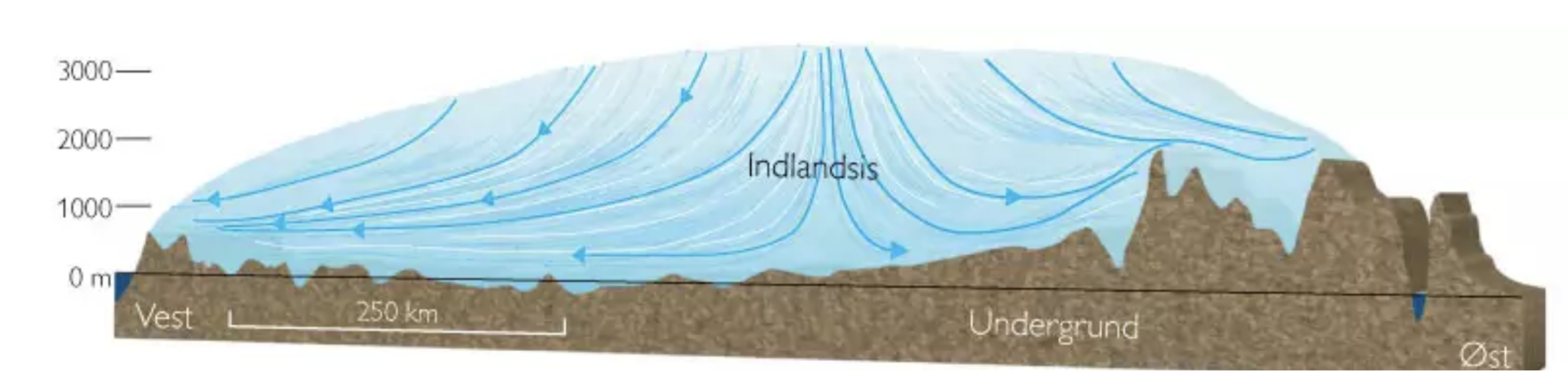
This is a model of the ice sheet on Greenland; it covers 80% of the country.
The ice sheet began as several ice caps that eventually merged to a single big one.
The ice caps were created and grew by snowfall after snowfall coming to rest on top of another and gradually the snow was compressed to ice.
-
What do the arrows on the model show?
-
The ice sheet contains 2.7 gigatons of ice. How many tonnes is 1 gigaton? How many kilos is 1 tonne?
-
What do you see in the pictures on pages 18-19 in the book?
The model shows the extension of ice in the northern hemisphere during the latest glacial period, the Weichselian glaciation.
In glacial periods the ice caps spread over large parts of the globe.
Today it is just 80% of Greenland and the North Pole that are covered by ice.
-
How many years have passed since the Weichselian glaciation?
-
How do you obtain information about the climate in the past?
-
How many years ago was the Eemian interglacial period? Search the Internet.
This is a model of the ice sheet on Greenland; it covers 80% of the country.
The ice sheet began as several ice caps that eventually merged to a single big one.
The ice caps were created and grew by snowfall after snowfall coming to rest on top of another and gradually the snow was compressed to ice.
-
What do the arrows on the model show? See page
-
On page 15 is a map of Sermeq Kujalleq. What does it show?
-
How can you obtain information about climate changes by studying the ice sheet and glaciers?
The model shows the extension of ice in the northern hemisphere during the latest glacial period, the Weichselian glaciation.
In glacial periods the ice caps spread over large parts of the globe.
Today it is just 80% of Greenland and the North Pole that are covered by ice.
-
What information can be obtained from the ice cores?
-
Besides the Weichselian and the Eemian, what other glacial and interglacial periods have there been and when?
-
What areas were covered by a thick layer of ice during the Weichselian glaciation?
Partners


