ABOUT THE MATERIAL
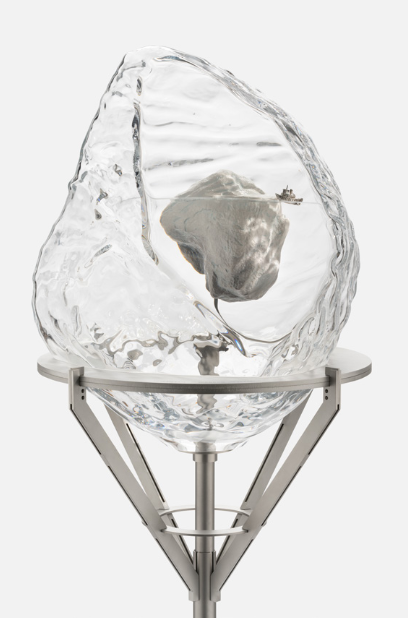
- You only see a small part of the iceberg
- Icebergs can flip over without warning
- An iceberg’s journey through the world
-
You solve the tasks by using
- Text
- Audio
- Drawing tool
- Images
In the book you can find more information on the subject.
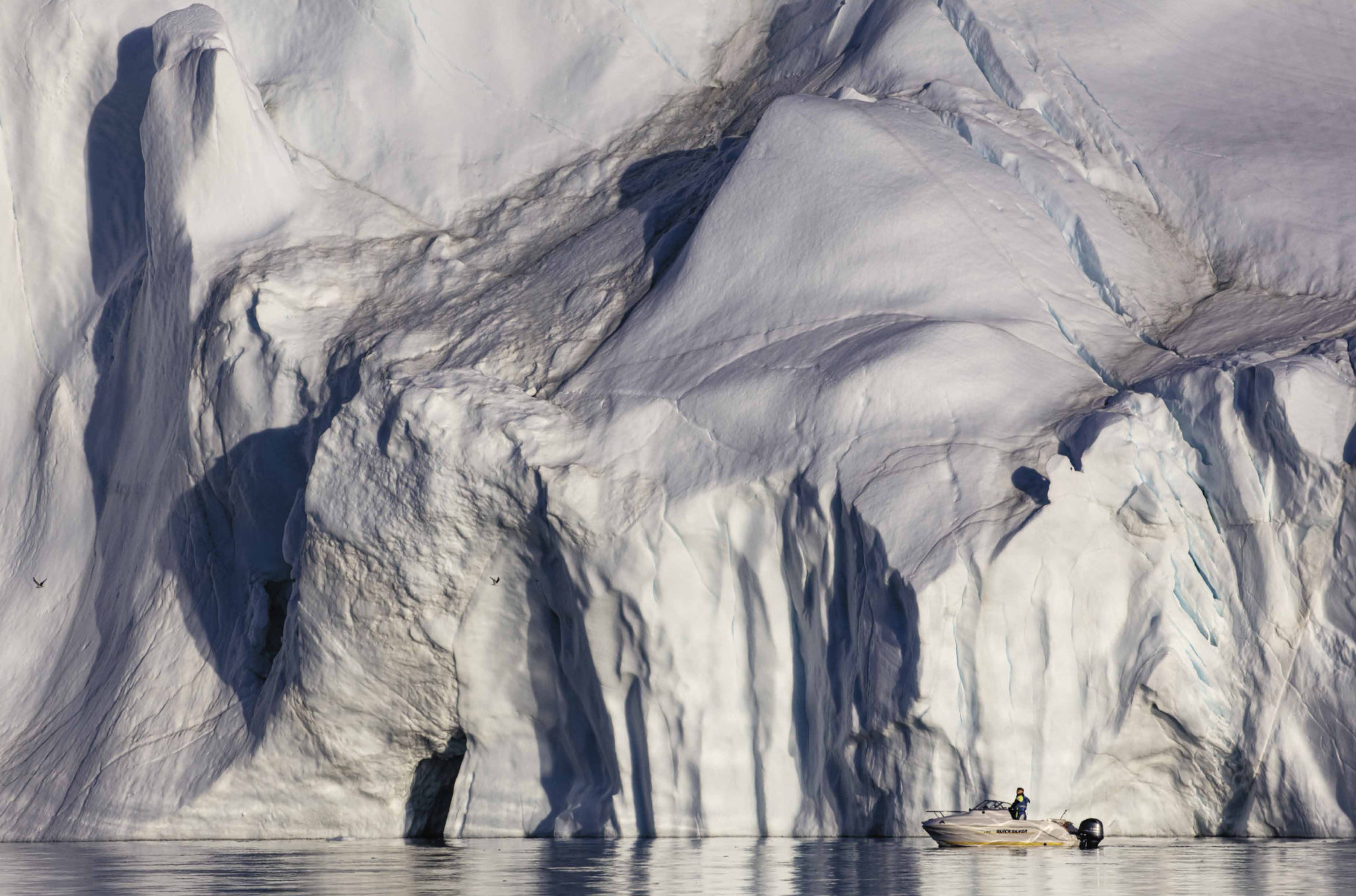
Most of the iceberg is hidden under the surface of the water.
The iceberg in the picture is maybe 900 metres high. What sticks out of the water is only 100 metres.
-
Put an icecube in a glass of water. Does it go to the bottom or does it float?
-
Put a mark on the water level and let the ice cube melt. Does the water level fall or rise or is it unchanged?
When the iceberg floats through the Icefjord it melts from below. It changes form and loses the balance.
-
Why can an iceberg turn around suddenly?
-
What might happen if you lost your balance?
- What do you see in the film?
The largest Greenlandic icebergs take three to four years to melt. Before they melt they drift far into the ocean.
-
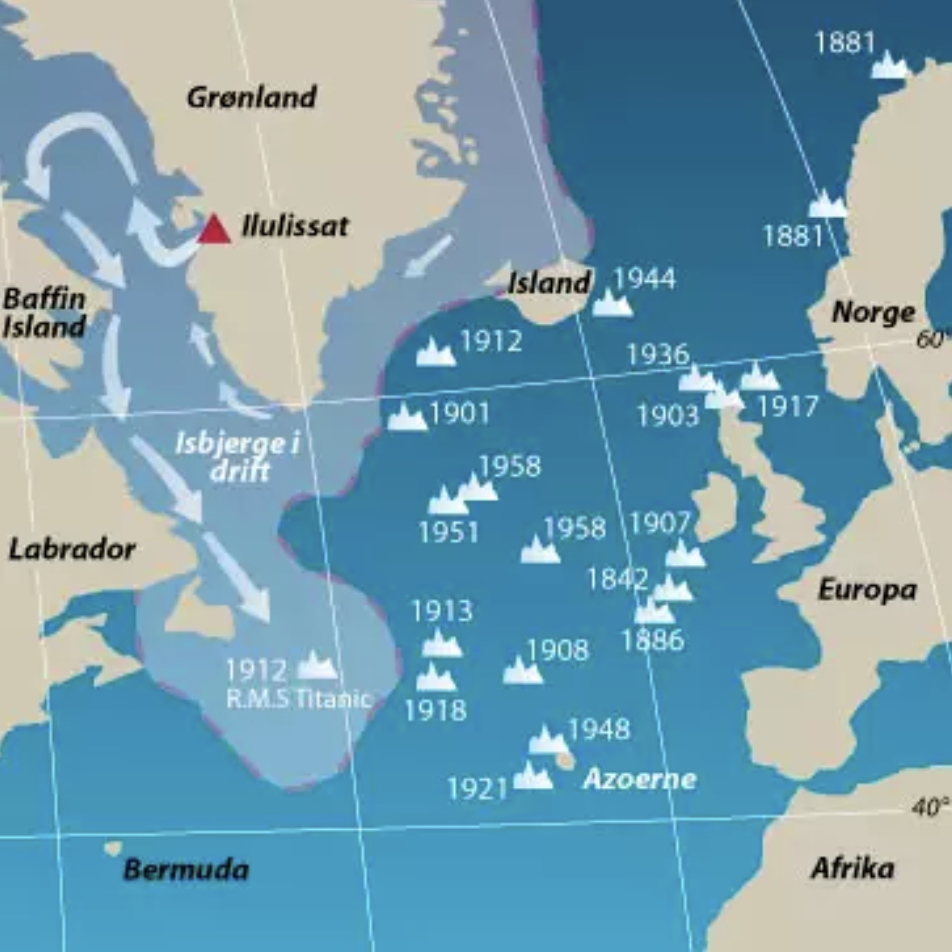
In 1912 a big ship collides with an iceberg and goes down. What was the name of the ship?
-
You are going on a cruise to Bermuda with you class. What names shall be included in the passenger list?
Most of the iceberg is hidden under the surface of the water. The iceberg in the picture is maybe 900 metres high. What sticks out of the water is only 100 metres.
Icebergs of that size may reach a volume of 1.5 cubic kilometres.
-
Put an ice cube in a glass of water. How big a part is visible above the surface of the water?
-
Put a mark on the water level and let the ice cube melt. Does the water level fall or rise or is it unchanged?
When the iceberg floats through the Icefjord it melts from below. It changes form and loses the balance.
-
Why can an iceberg turn around suddenly?
-
Explain what fulcrum is.
-
Click on the black square. Click on the arrow. What do you see?
The largest Greenlandic icebergs take three to four
years to melt. Before they melt they drift far into the ocean.
Reconstruction of the shipwreck of the Titanic.
-
In 1912 the Titanic collides with an iceberg and goes down. Why did it go down?
-
In 1948 you are going on a cruise with your class to Ilulissat. You are sailing from Morocco. Where do you pass an iceberg?
Have you ever heard the expression “it is just the tip of the iceberg“? It means that far the greatest part of the iceberg is hidden below the surface.
In fact only 10% is above water.
-
What can the expression “it is just the tip of the iceberg” also mean?
-
Icebergs from Sermeq Kujalleq can become 900 metres tall.
Try comparing that with other tall objects. You could use the Internet.
-
What do you think when you see this picture (pp.28-29)?
When the iceberg floats through the Icefjord it melts from below. It changes form and loses the balance.
-
What do you see in the video on this page? It is in the black square.
-
Why can icebergs float?
-
On page 31 are three models showing an iceberg breaking from the glacier. Do they also show the iceberg flipping over? Explain.
The largest Greenlandic icebergs take three to four years to melt. Before they melt completely they drift far into the ocean.
Rekonstruktion af Titanics forlis. Filmen er på engelsk.
-
On the map (page 32) you see the journey of the icebergs from Greenland. What do the numbers at the icebergs indicate?
-
What are the blue lines going horisontically and vertically?
-
Explain the dotted lines with small arrows on the map.
Have you ever heard the expression “it is just the tip of the iceberg“? It means that far the greatest part of the iceberg is hidden below the surface.
In fact only 10% is above water.
-
Write a short story where the point is: “it was just the tip of the iceberg“.
-
Icebergs from Sermeq Kujalleq can become 900 metres tall.
Try comparing that with other tall objects. You could use the Internet.
-
Estimate how high this iceberg is (pp. 28-29). Assume that the person in the picture is 170 cm tall.
When the iceberg floats through the Icefjord it melts from below. It changes form and loses the balance.
-
What do you see in the video on this page? It is in the black square.
-
What is the difference in density of frozen and liquid water?
-
On page 31 are three models showing an iceberg breaking from the glacier. Draw more pictures where you demonstrate the iceberg flipping over.
The largest Greenlandic icebergs take three to four years to melt. Before they melt completely they drift far into the ocean.
-
How many degrees of longitude and latitude is the globe divided into? Inside what degrees of longitude and latitude are the icebergs shown on the map?
-
What ocean currents are indicated on the map?
-
What ocean currents did transport the iceberg that Titanic collided with? How long time did the journey take from Ilulissat till the collision with the Titanic? Look at the map (page 32).
Partners


