THE NORTHERN PRAWN
ABOUT THE MATERIAL
- The northern pawn is a hermaphrodite
- Lawnmowers of the sea ice – the small crustaceans
- The opilio crab
-
You solve the tasks by using
- Text
- Audio
- Drawing tool
- Images
In the book you can find more information on the subject.
The northern prawn is a common species of prawn in the Disko Bay.
It is an important source of food for several species of fish.
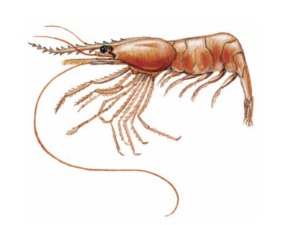
It is hatched as male. After 5-6 years it changes sex and lives the rest of its life as female.
The northern prawn is essential to the fishing and economy in Ilulissat.
-
The northern prawn is food to fish. Which fish?
-
How many pairs of legs, tail feet and antennae does the prawn have?
-
What is a hermaphrodite?
The small crustaceans are called krill. Krill feed on phytoplankton that they scrape of the underside of the ice with the stiff brushes on the tips of their legs.
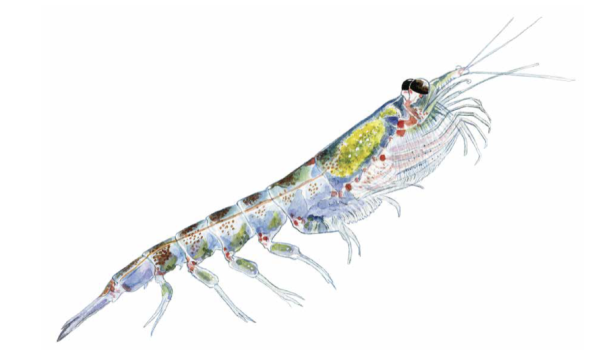
While “grazing” the animal can remind of a lawnmower in action.
-
Why do you say that krill are “grazing”?
-
What do krill eat?
-
What sea animals feed on krill?
The opilio crab lives at the bottom of the sea.
The male is bigger than the female. The shell of the male can reach 7 to 16 cm, that of the female 5½ to 10.
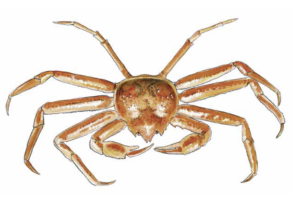
The crabs mate in the end of winter or beginning of spring.
The female lays 20,000-150,000 eggs.
The eggs are hatched after approximately a year. In colder areas it may take up to two years.
Learn more about shellfish.
-
What does the crab eat?
-
How old can it become?
-
How long time does it take before a larva is hatched from the egg?
The northern prawn is a common species of prawn in the Disko Bay.
It is an important source of food for several species of fish.
It lives the first 5-6 years as male. Then it changes sex and lives the rest of its life as female.
The northern prawn is essential to the fishing and economy in Ilulissat.
-
What fish and animals eat the northern prawn?
-
How many years does it take before a prawn is ready for the dinner table?
-
What is a hermaphrodite?
The small crustaceans are called krill. Krill feed on phytoplankton they scrape of the underside of the ice with the stiff brushes on the tips of their legs.
They are found in big shoals in the free water masses; 1 m³ can contain 10,000-30,000 crustaceans.
While “grazing” the animal can remind of a lawnmover in action.
Learn more about krill.
-
Why do you say that krill are “grazing”?
-
How does the krill swim when “grazing” under the ice?
-
What sea animals feed on krill?
The opilio crab lives at the bottom of the sea.
Adult male crabs can have a shell width of up to 16 cm, the females up to 10 cm.
The crabs mate in the end of winter or beginning of spring
The female lays 20,000-150,000 eggs. The eggs are hatched after approximately a year. In colder areas it may take up to two years.
Learn more about the opilio crab.
-
What does the crab eat?
-
Who eats the crab?
-
The population of the opilio crab is declining. What might be the cause?
The northern prawn is a common species of prawn in the Disko Bay.
It changes sex from male to female after the first five to six years of its life.
Prawns are an important source of food in the arctic food web, and play a substantial role in the fishing industry and the economy of Ilulissat.
-
The northern pawn is a protandrous hermaphrodite. What does that mean?
-
What does the prawn eat?
-
Why is the northern prawn so important to the economy in Ilulissat?
The small crustaceans in the Icefjord go by several names. One of them is krill.
In 1 m3 of water may live 10-30.000 krill.
Krill feed on the phytoplankton under the sea ice.
They have stiff brushes on the tips of their legs and use these to “graze” the layer of algae.
-
Why is krill called the lawnmower of the sea ice?
-
Study the marine food web: who eats krill?
-
On page 12 the world under the ice is called the grassy plains of the arctic area – what can krill be compared to?
The Opilio, or snow crab can live in areas with temperatures as low as -1°C.
You can tell females from males by the size of their shell.
After mating the female keeps the eggs for 1-2 years under her abdomen before they are hatched, depending on the temperature.
The larvae eat phytoplankton.
-
Why are the crab’s eggs hatched in springtime?
-
What is the physical difference between the male and female crab?
-
Where in the marine food web (page 13) would you place the opilio crab?
The northern prawn is a common species of prawn in the Disko Bay.
It changes sex from male to female after the first five to six years of its life.
Prawns are an important source of food in the arctic food web, and play a substantial role in the fishing industry and the economy of Ilulissat.
-
What fish and animals eat the northern prawn?
-
How many years does it take before a prawn is ready for the dinner table?
-
What is a hermaphrodite?
The small crustaceans in the Icefjord go by several names. One of them is krill.
In 1 m3 of water may live 10-30.000 krill.
Krill feed on the phytoplankton under the sea ice.
They have stiff brushes on the tips of their legs and use these to “graze” the layer of algae.
-
Why is krill called the lawnmower of the sea ice?
-
Study the marine food web: who eats krill?
-
On page 12 the world under the ice is called the grassy plains of the arctic area – what can krill be compared to?
The Opilio, or snow crab can live in areas with temperatures as low as -1°C.
You can tell females from males by the size of their shell.
After mating the female keeps the eggs for 1-2 years under her abdomen before they are hatched, depending on the temperature.
The larvae eat phytoplankton.
-
Why are the crab’s eggs hatched in springtime?
-
What is the physical difference between the male and female crab?
-
Where in the marine food web (page 13) would you place the opilio crab?
Partners


