
ABOUT THE MATERIAL
- Summer hunting with kayaks
- Winter hunting on the sea ice
- The uses of seals
-
You solve the tasks by using
- Text
- Audio
- Drawing tool
- Images
In the book you can find more information on the subject.
In the period 2500-800 BC the Saqqaq people were living at the Icefjord.
They had an early version of the kayak. To catch their game they used the harpoon.
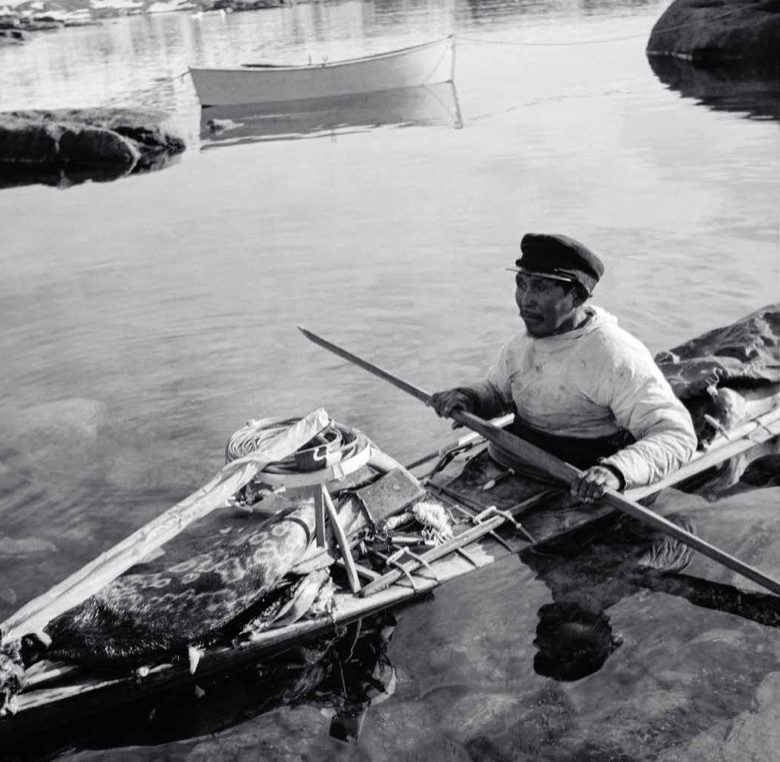
Around 1200 Inuit, the Thule people, arrived at the Disko Bay. They are the ancestors of the Greenlandic people.
They developed the kayak into its present form and introduced floats. The floats prevented the harpooned seal from getting away or sinking to the bottom.
-
What other hunting weapon is similar to the harpoon?
-
This picture is of Ole Andreasen from ca. 1936. How many seals has he caught?
-
What does the word ancestors mean?
In winter the seal makes holes in the ice so that it can breathe. This makes it easy for the hunters to find the places where seals can be caught from the sea ice.
Hunting from the sea ice is called breathing hole hunting.
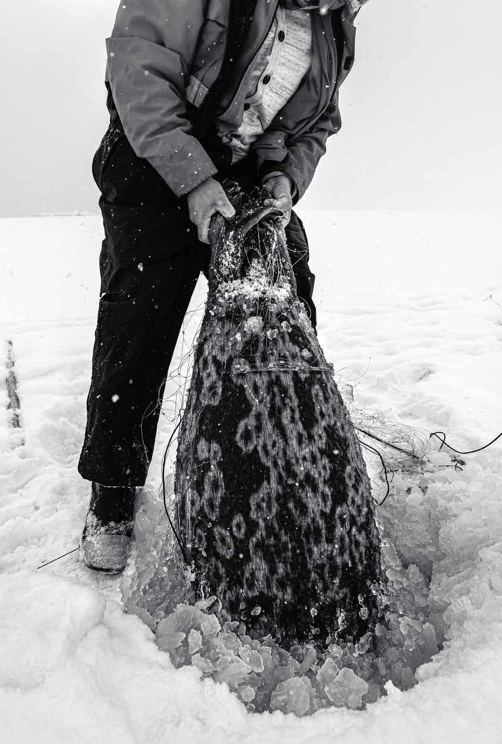
The first settlers used harpoon to catch the seals. Today they are caught with net.
-
What was special about the harpoon head the settlers developed? See page 29.
-
In the picture a seal is being drawn out of the breathing hole. What kind of seal is it?
-
For how many thousand years has breathing hole hunting been known?
The ringed seal has always been important food for the settlers at the Icefjord.
Seal meat contains high amounts of vitamins C and D which are needed to prevent illnesses.
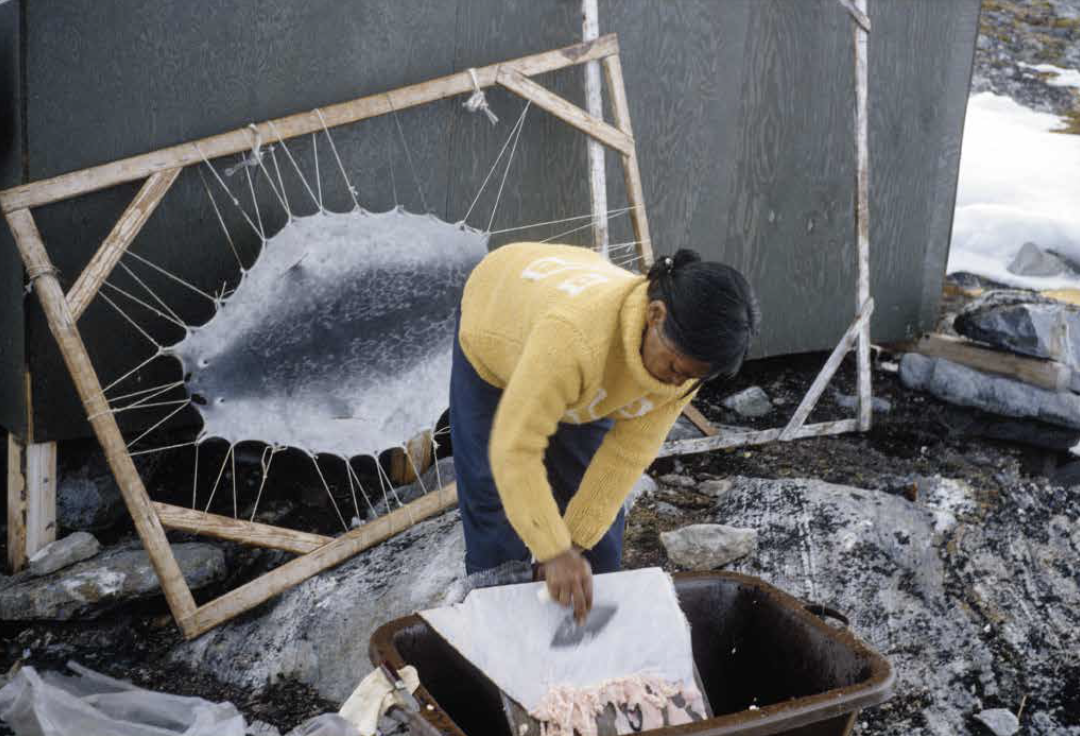
All of the seal was used. The blubber that was not eaten, provided fuel and light. The skin was used for clothing and kayaks.
-
What is the woman in the picture doing?
-
Make a list of the things a seal can be used for. My list:
-
Why was it important to eat seal meat – especially in winter?
The first settlers, the Saqqaq people, lived at the Icefjord in the periode 2500-800 BC.
They had an early version of the kayak as their preferred vessel. To catch their game they used the harpoon.
Around 1200 Inuit, the Thule people, arrived at the Disko Bay. They came from Canada and are the ancestors of the Greenlandic people.
They developed the kayak into its present form and introduced floats as a development of the hunt with harpoons. The floats prevented the harpooned seal from getting away or sinking to the bottom.
Find more information about migration to Greenland.
-
Which other prehistoric hunting weapon is similar to the harpoon – is it still used for hunting?
-
What was the floats made of? Get help at p. 25 in the book.
-
Write, draw or record a story with the title A dangerous journey from Canada to the Disko Bay in 1249.
My story:
Hunting the ringed seal at breathing holes during the winter season was vital for prehistoric people. This hunting method was already used by the first settlers at the Icefjord. Today with more modern equipment.
The first settlers developed a type of harpoon head which lodged itself horizontally in the wound when the line was pulled. The harpooned seal was then killed with a lance fitted with a foreshaft.
-
Why was the ringed seal vital to people of the past?
-
In the picture a seal is being drawn out of the breathing hole. How has it been caught?
-
For how many thousand years has breathing hole hunting been known?
The ringed seal has always been important food for the settlers at the Icefjord.
Seal meat contains high amounts of vitamins C and D which are needed to prevent illnesses such as scurvy.
All of the seal was used. The blubber that was not eaten, provided fuel and light. The skin was used for clothing and kayaks.
-
Which tool is the woman in the picture using, and what is she doing?
-
Make a list of the things a seal can be used for.
-
Why was it important to eat seal meat – especially in winter?
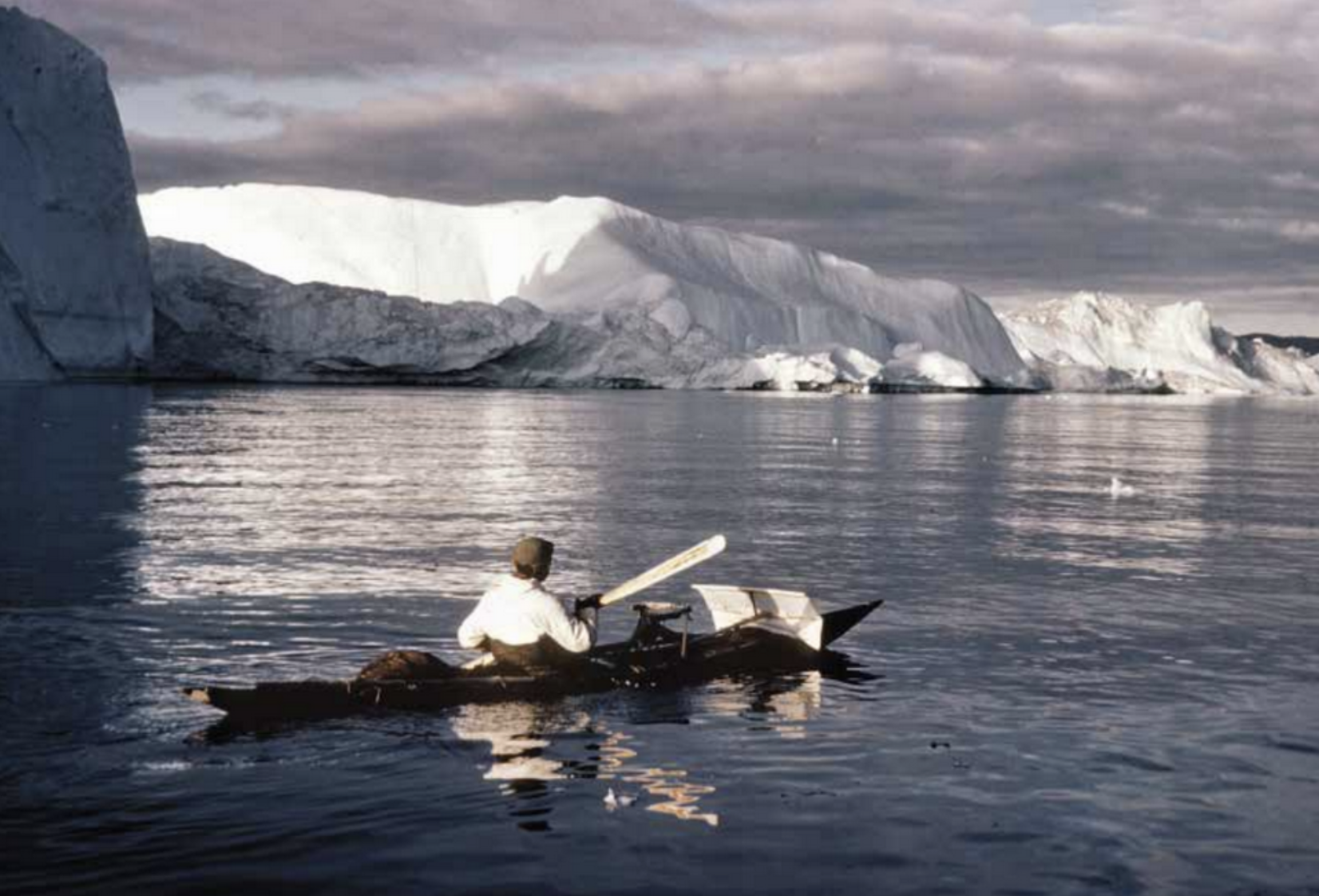
In summer it is possible to row out in kayak and catch animals in the Icefjord.
Through several thousand years the kayak and the hunting tools have been developed to those we know today.
-
What was the preferred vessel and hunting tool of the Saqqaq people?
-
What is a float?
-
When did the Thule people arrive?
In winter the animals are caught from a hole in the ice. In the past it was a necessity to catch animals in winter too.
This method is called breathing hole hunting. Helped by his dog the hunter finds a breathing hole created by a seal while the sea is freezing over.
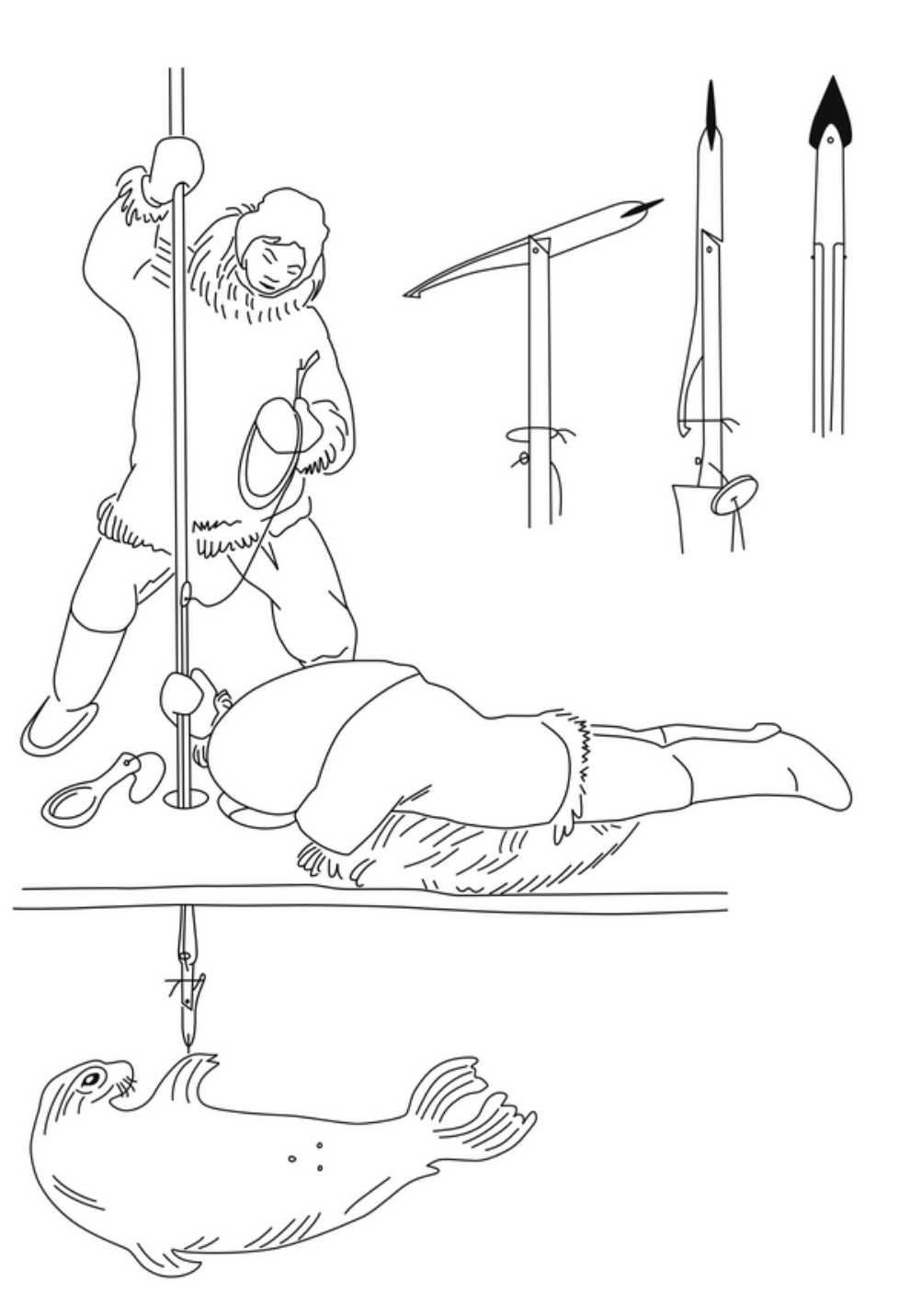
-
On pages 30-31 in the book two pictures show breathing hole hunting. Which species of seal do you see?
-
How does a toggling harpoon work?
-
Describe the difference between summer and winter hunting.
For a very long time the ringed seal has been the main food for the inhabitants at the Icefjord.
But there are other species of seal living around Greenland: the harp seal, spotted seal, bearded seal and hooded seal.
In the picture you see a woman scraping a seal skin with a ulu.
-
Not just the meat from the seal was useful to Inuit. What other parts of the seal were used and for what?
-
What is an ulu?
-
Study the five different species of seals and notice the differences between them.
In summer it is possible to row out in kayak and catch animals in the Icefjord.
Through several thousand years the kayak and the hunting tools have been developed to those we know today.
-
Who was the Saqqaq people?
-
What was the preferred vessel and hunting tool of the Saqqaq people?
-
How did a float work?
In winter the animals are caught from a hole in the ice. In the past it was a necessity to catch animals in winter too. This method is called breathing hole hunting. Helped by his dog the hunter finds a breathing hole that can be used for hunting.
-
Why is it called breathing hole hunting?
-
How does a toggling harpoon work?
-
How does the future look for winter hunting in relation to climate changes?
For a very long time the ringed seal has been the main food for the inhabitants at the Icefjord.
But there are other species of seal living around Greenland: the harp seal, spotted seal, bearded seal and hooded seal.
In the picture you see a woman scraping a seal skin with an ulu.
-
Not just the meat from the seal was useful to Inuit. What other parts of the seal were used and for what?
-
What is an ulu?
-
Study the five different species of seals and notice the differences between them.
Partners


