THE HARP SEAL
ABOUT THE MATERIAL
- The harp seal – the fastest seal
- The steadfast ringed seal.
-
You solve the tasks by using
- Text
- Audio
- Drawing tool
- Images
In the book you can find more information on the subject.
The harp seal is the most numerous seal in the northern hemisphere.
It spends most of the year far at sea at the rim of the pack ice.
The pup is born on the ice. As it has no insulating layer of blubber, the fur is the only protection against the cold shock at entering the world.
The harp seal swims and jumps out of the water. The resistance in air is less than in water so that by “floating” through the air it moves faster.
-
What does most numerous mean?
-
In summer the harp seal is at Greenland. Where is it in winter?
-
Why does the pup have white fur?
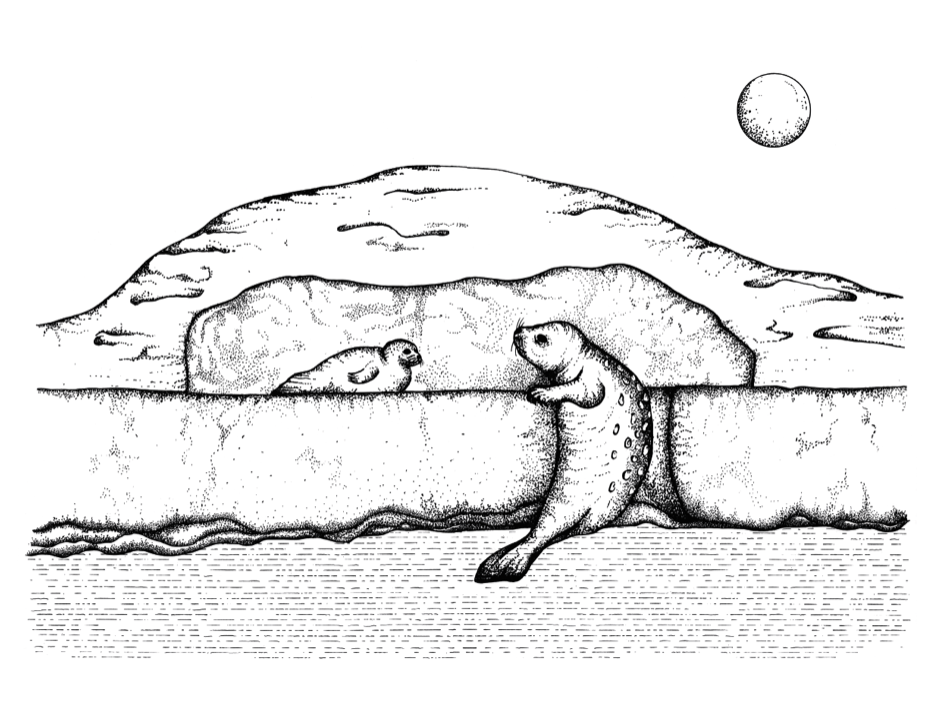
The ringed seal is the mammal that has adapted best to the arctic winter.
It lives in the Icefjord all year and is therefore also called the Icefjord seal.
Even if the winter ice gets up to two metres thick, it survives by keeping breathing holes in the ice open.
The ringed seal gives birth in a snow cave where the newborn is well protected.
Learn more about the ringed seal.
-
What does steadfast mean?
-
The ringed seal is a mammal. What is characteristic of a mammal?
-
What does the ringed seal eat?
The harp seal is the most numerous seal in the northern hemisphere.
It spends most of the year far at sea at the rim of the pack ice.
The pup is born on the ice. As it has no insulating layer of blubber, the fur is the only protection against the cold shock at entering the world.
The harp seal swims and jumps out of the water. The resistance in air is less than in water so that by “floating” through the air it moves faster.
-
Why is the harp seal the fastest seal?
-
In summer the harp seal is at Greenland. Where is it in winter?
-
Where does the harp seal give birth to its young?
The ringed seal is the mammal that has adapted best to the arctic winter.
It lives in the Icefjord all year and is therefore also called the Icefjord seal.
Even if the winter ice gets up to two metres thick, it survives by keeping breathing holes in the ice open.
The ringed seal gives birth in a snow cave where the newborn is well protected.
Learn more about the ringed seal.
-
What is meant by calling the ringed seal steadfast?
-
How does the ringed seal differ from the harp seal?
-
What does the ringed seal eat?
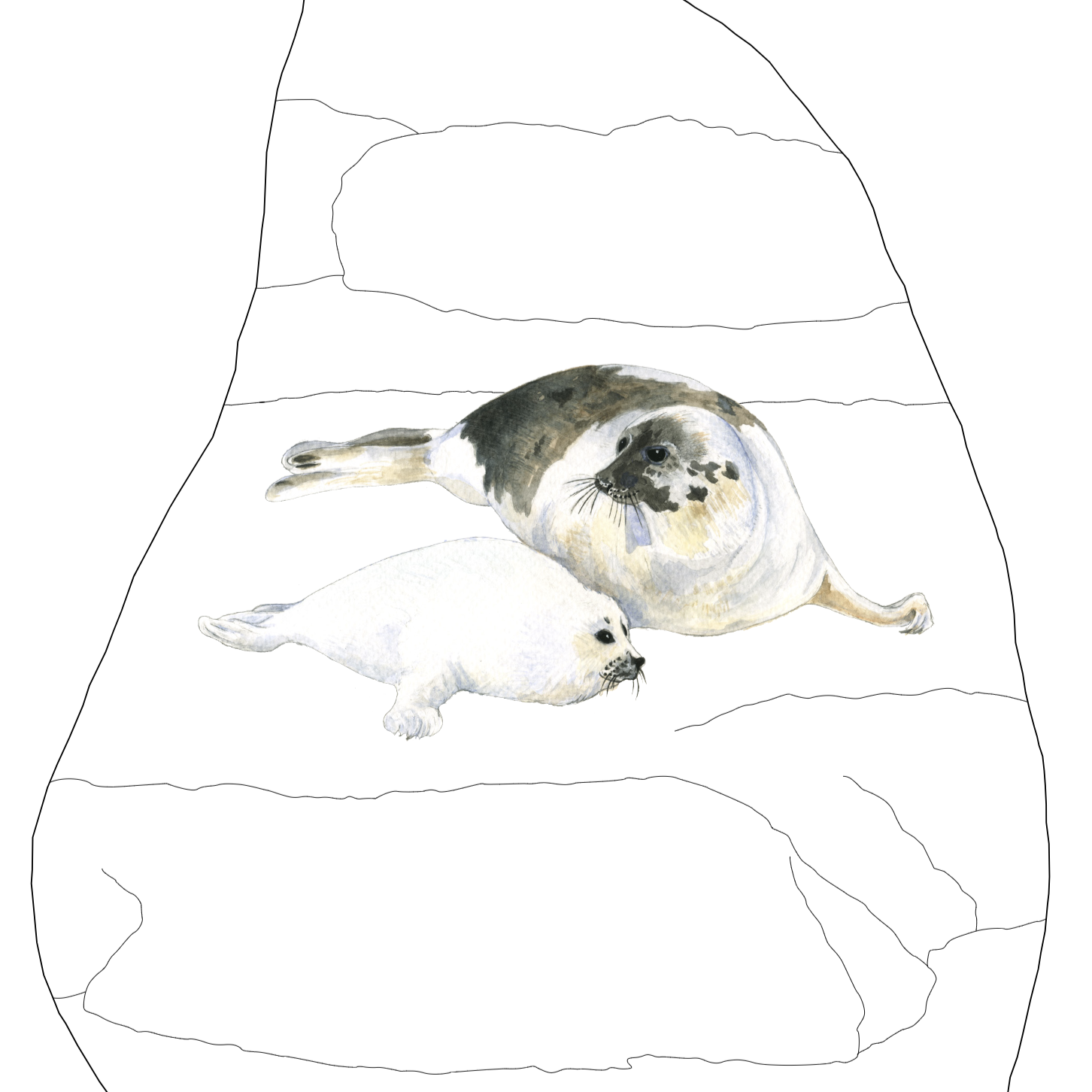
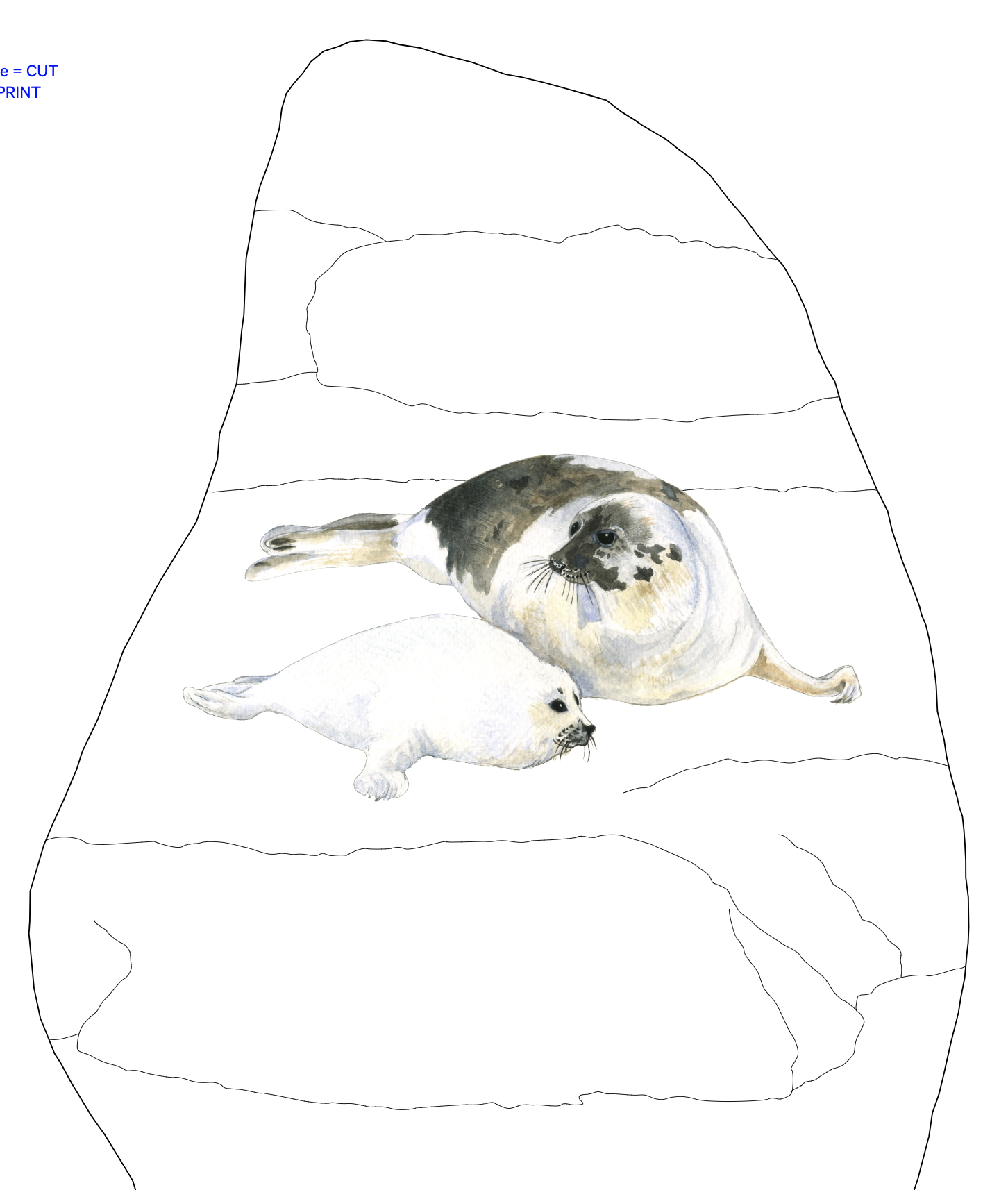
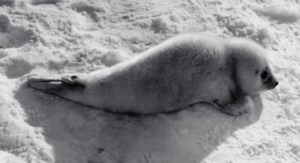
This is a picture of a seal pup. It has a white fur that will later become darker around the head and on the back a horseshoe-shaped marking will appear.
An adult seal eats up to 3 kg a day; it eats cod and crustaceans.
The harp seal swims like a dolphin, making it the fastest of seals.
-
What is dolphin swimming?
-
What does moulting mean?
-
Why can the cold be dangerous to a newborn pup?
The ringed seal is the smallest seal in Greenland and the one that has adapted best to the life in the Icefjord.
In springtime the females seek shelter in lairs in the snow where they give birth.
The ringed seal mostly eats polar cod and weighs 50-100 kg.
-
How has the ringed seal adapted to life in the Icefjord, making it possible to survive all year?
-
What are the benefits of breeding in a lair in the snow?
-
Would it affect the population of ringed seal if the copepod was unable to get fat during the spring bloom?
This is a picture of a seal pup. It has a white fur that will later become darker around the head and on the back a horseshoe-shaped marking will appear.
An adult seal eats up to 3 kg a day; it eats cod and crustaceans.
The harp seal swims like a dolphin, making it the fastest of seals.
-
What is dolphin swimming?
-
What does moulting mean?
-
Why can the cold be dangerous to a newborn pup?
The ringed seal is the smallest seal in Greenland and the one that has adapted best to the life in the Icefjord.
In springtime the females seek shelter in lairs in the snow where they give birth.
The ringed seal mostly eats polar cod and weighs 50-100 kg.
-
How has the ringed seal adapted to life in the Icefjord, making it possible to survive all year?
-
What are the benefits of breeding in a lair in the snow?
-
Would it affect the population of ringed seal if the copepod was unable to get fat during the spring bloom?
Partners


