THE GREENLAND HALIBUT
ABOUT THE MATERIAL
- Greenland halibut stay in the Icefjord their entire lives
- The polar cod has adapted to extremely cold water
- The Greenland shark – the second largest predatory shark in the world
-
You solve the tasks by using
- Text
- Audio
- Drawing tool
- Images
In the book you can find more information on the subject.
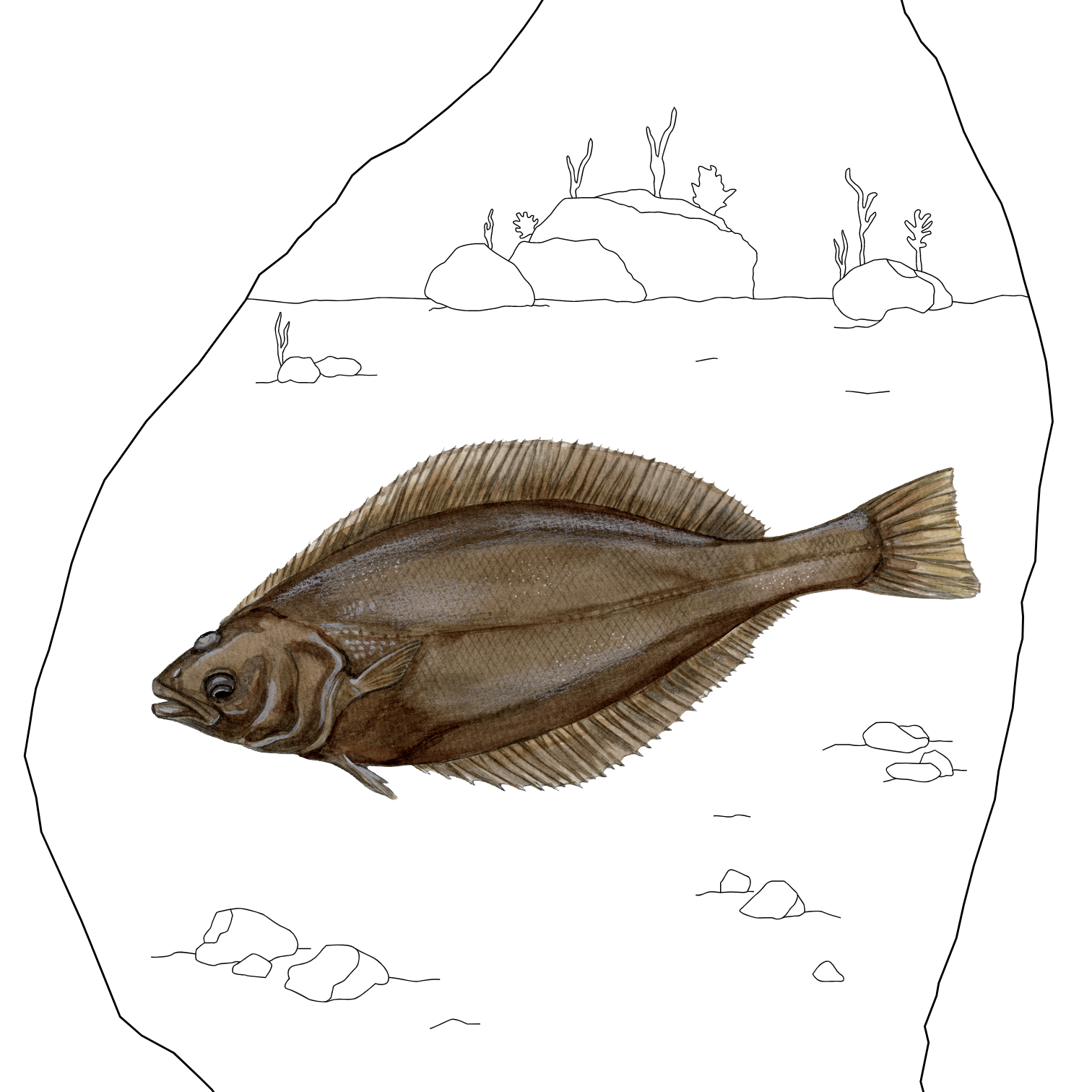
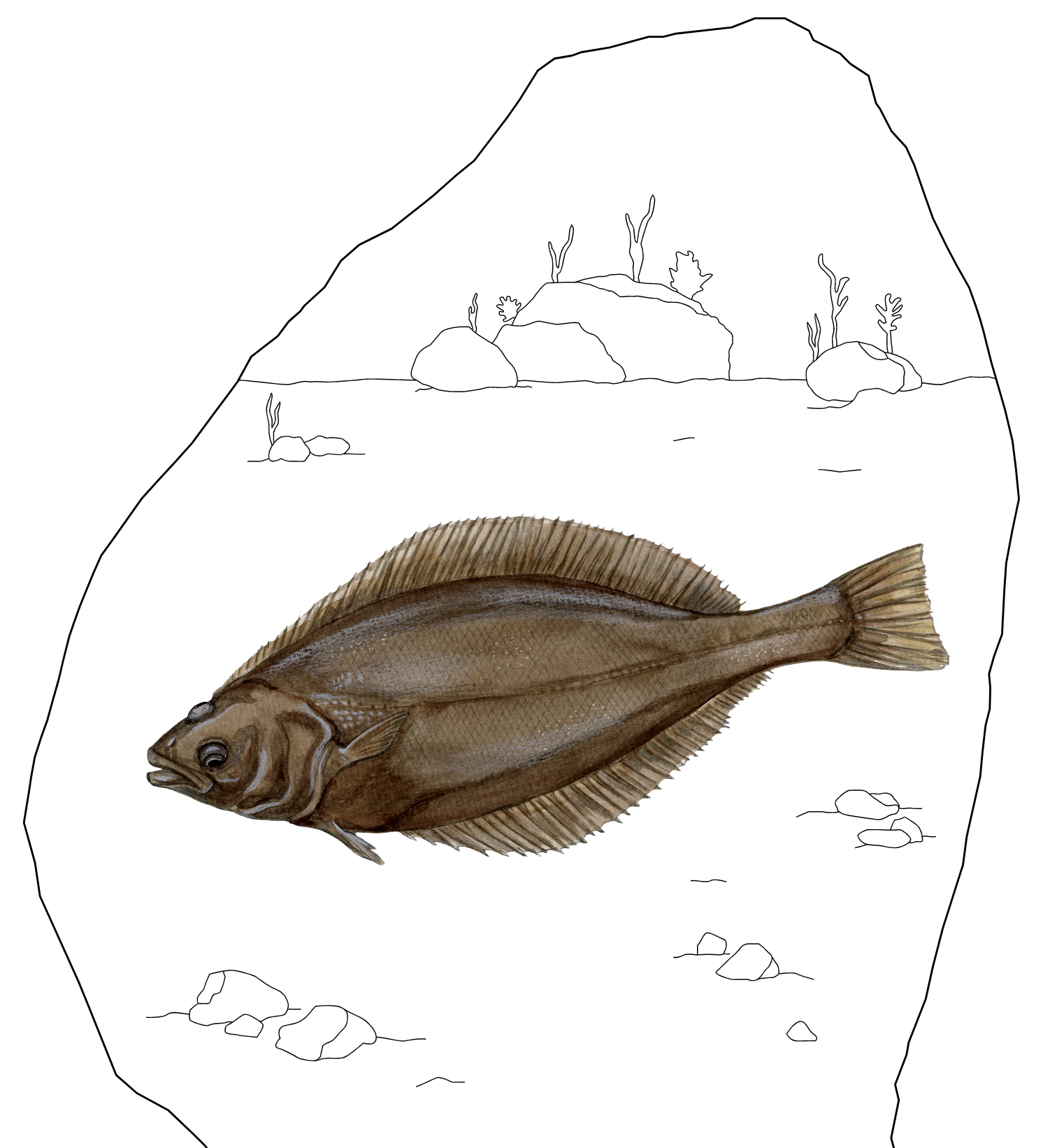
The Greenland halibut is the most numerous fish in the Icefjord.
Greenland halibut in the Icefjord are slightly fatter than those in the Disko Bay. They eat better food.
The female is a little bigger than the male. It breeds in the Davis Strait where it spawns up to 60,000 eggs.
Greenland halibut can reach a length of 120 cm and a weight of 45-50 kg.
-
Why are Greenland halibut fatter in the Icefjord?
-
What other fish live in the Icefjord?
-
What is fry?
The polar cod has “antifreeze” in its blood – so it is capable of living in very cold water, down to -1.8°C.
The polar cod is of no importance to fishing in Greenland. But it serves as food to many other species of animals.
-
Is the polar cod a flatfish or a round fish?
-
Which animals eat polar cod?
-
What does the polar cod eat?
The Greenland shark can grow up to 5½ m long.
It is the biggest shark in the Arctic and the second largest predatory shark in the world.
It can become more than 250 years old.
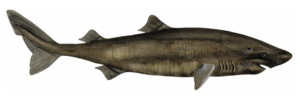
The shark is almost blind. In its eyes often lives a 3-4 cm long copepod.
When an animal lives on another animal, it is called a parasite.
Learn more about the Greenland shark.
-
Which predatory shark is the biggest in the world? Search the Internet for world’s biggest shark or get help from your teacher.
-
The Greenland shark is almost blind. Why?
-
What does the Greenland shark eat?
The Greenland halibut is the most numerous fish in the Icefjord.
Greenland halibut in the Icefjord are slightly fatter than those in the Disko Bay. They eat better food.
The female is a little bigger than the male. It breeds in the Davis Strait where it spawns up to 60,000 eggs.
Greenland halibut can reach a length of 120 cm and a weight of 45-50 kg.
-
Why are Greenland halibut fatter in the Icefjord?
-
What other fish live in the Icefjord?
-
What is fry?
The polar cod has “antifreeze” in its blood – so it is capable of living in very cold water, down to -1.8°C.
The polar cod is of no importance to fishing in Greenland. But it serves as food to many other species of animals.
-
Is the polar cod a flatfish or a round fish?
-
Which animals eat polar cod?
-
What does the polar cod eat?
The Greenland shark can grow up to 5½ m long.
It is the biggest shark in the Arctic and the second largest predatory shark in the world.
It can become more than 250 years old.
The shark is almost blind. In its eyes often lives a 3-4 cm long copepod.
When an animal lives on another animal, it is called a parasite.
Learn more about the Greenland shark.
-
Which predatory shark is the biggest in the world? Search the Internet for world’s biggest shark or get help from your teacher.
-
The Greenland shark is almost blind. Why?
-
What does the Greenland shark eat?
The Greenland halibut is a right-eyed flatfish differing from other flatfish by having its left eye placed on the side of the body and not close to the right eye.
The Greenland halibut can weigh up to 45-50 kg and is a good and popular edible fish.
Greenland halibut in the Icefjord are on average fatter than halibut in the Disko Bay
-
How do you tell a Greenland halibut from other flatfish?
-
Flatfish often live at the bottom where they can hide – does that go for the Greenland halibut too?
-
Why are Greenland halibut in the Icefjord fatter than other Greenland halibut?
The polar cod can be distinguished from other cod by the large distance between the two anal fins and the three dorsal fins.
It lives everywhere along the Greenlandic coasts. And in practically the entire arctic area.
The polar cod has “antifreeze” in its blood making it capable of living in the extreme cold, It can grow up to 35 cm.
The polar cod is not important to the fishing industry in Greenland but it serves as food for seals and whales.
-
Describe the polar cod. Use as many technical terms as possible.
-
What would happen to the cod if it did not have antifreeze in its blood?
-
What does the polar cod eat?
The Greenland shark is a great mystery as it lives in very deep water and thus is difficult to watch.
Exactly how old it can grow is not known but at least 250 years.
The Greenland shark is practically blind due to a parasitical copepod sitting in its eyes.
It moves very slowly and is called sleeper shark. Nevertheless it feeds on seal and cod.
-
How can the Greenland shark catch seals swimming much faster than itself?
-
The Greenland shark’s visual sense is practically non-existent, but its electrical sense works really well. What senses do humans have?
-
The shark has a parasitical copepod in its eyes – what does parasitical mean?
The Greenland halibut is a right-eyed flatfish differing from other flatfish by having its left eye placed on the side of the body and not close to the right eye.
Greenland halibut live unlike many other flatfish both at the bottom and in the pelagic zone.
Greenland halibut in the Icefjord are on average fatter than halibut in the Disko Bay.
-
The Greenland halibut lives both at the bottom and in the pelagic zone. What does the pelagic zone mean?
-
The Greenland halibut is right-eyed – what flatfish are left-eyed?
-
Why are Greenland halibut in the Icefjord fatter than those elsewhere?
The polar cod can be distinguished for other cod by the fins.
The polar cod lives pelagic everywhere at the coast of Greenland.
It can grow up to 35 cm and become 6-7 years old.
The polar cod is not important to the fishing industry in Greenland but it serves as food for seals and whales.
-
What does it mean that the polar cod lives pelagic?
-
How has the polar cod adapted to life in extreme cold?
-
What would happen to the polar bear if the stock of polar cod were depleted?
The Greenland shark is a great mystery as it lives in very deep water and thus is difficult to watch.
Exactly how old it can grow is not known but it is considered to be the longest living vertebrate.
The Greenland shark is practically blind due to a parasitical copepod sitting in its eyes.
It moves very slowly and is called sleeper shark. Nevertheless it feeds on seal and cod.
-
Give an explanation of the niche of the Greenland shark – seen in relation to it being called the sleeper shark.
-
What is a vertebrate?
-
How has the Greenland shark adapted to life as almost blind in the deep sea without much light?
Partners


