THE EUROPEAN WHALERS

ABOUT THE MATERIAL
- Whaling – an economic attraction
- Adornment and fashion
- Music is a universal langu
-
You solve the tasks by using
- Text
- Audio
- Drawing tool
- Images
In the book you can find more information on the subject.
Between 1670 and 1750, around 100-200 ships a year sailed from Europe to the Disko Bay.
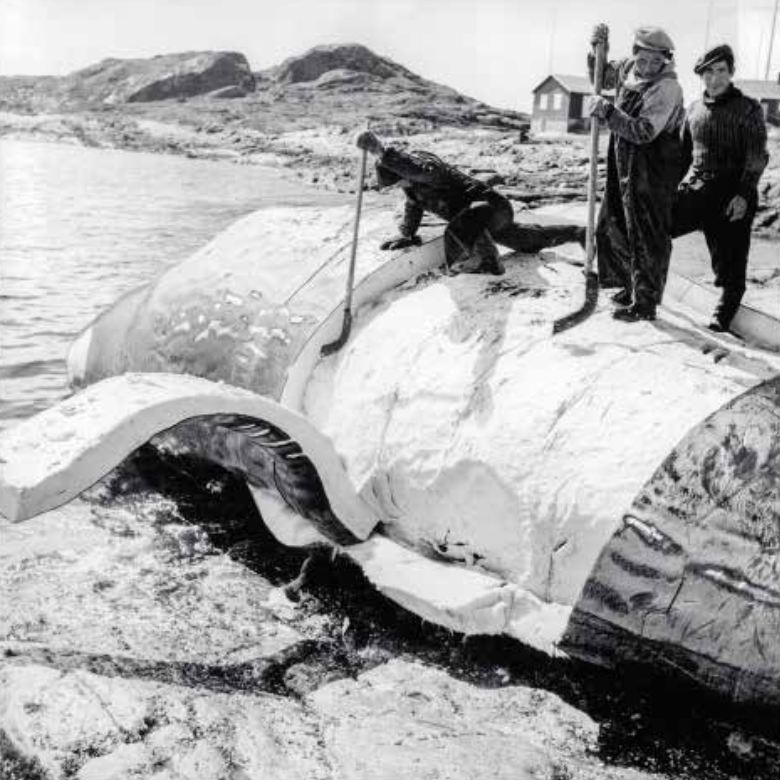
They were particularly interested in the fat blubber layer of the bowhead whale. They brought the blubber home where it was melted and used for lighting the streets of cities.
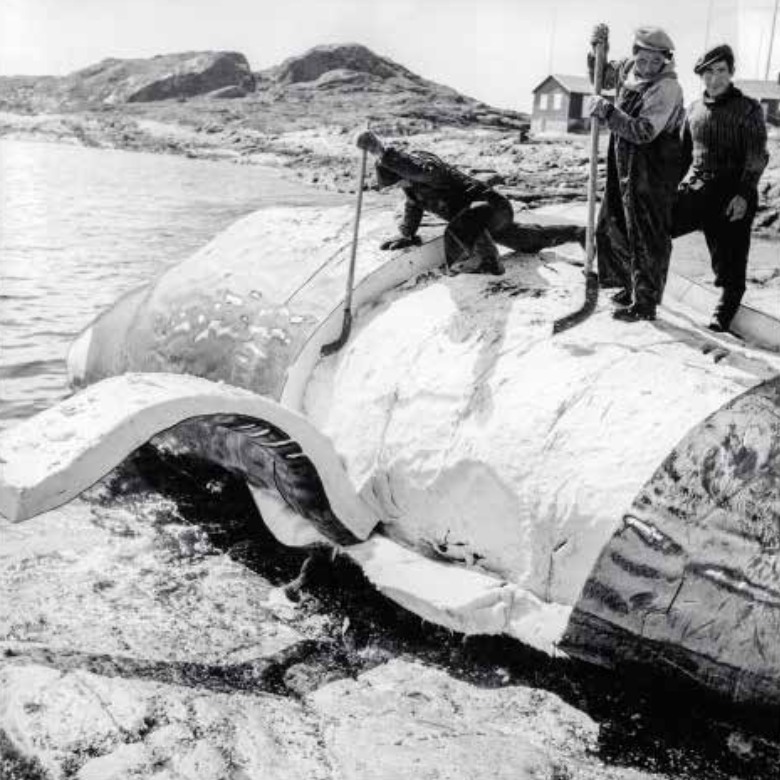
The whalers traded furs, walrus and narwhal tusks and food from the Inuit.
In exchange Inuit got glass beads, copper pans, felt hats, sewing needles, and cotton trousers.
-
What did the Europeans buy from the Inuit?
Write or draw you list:
-
What did the Inuit buy from the Europeans?
Write or draw your list:
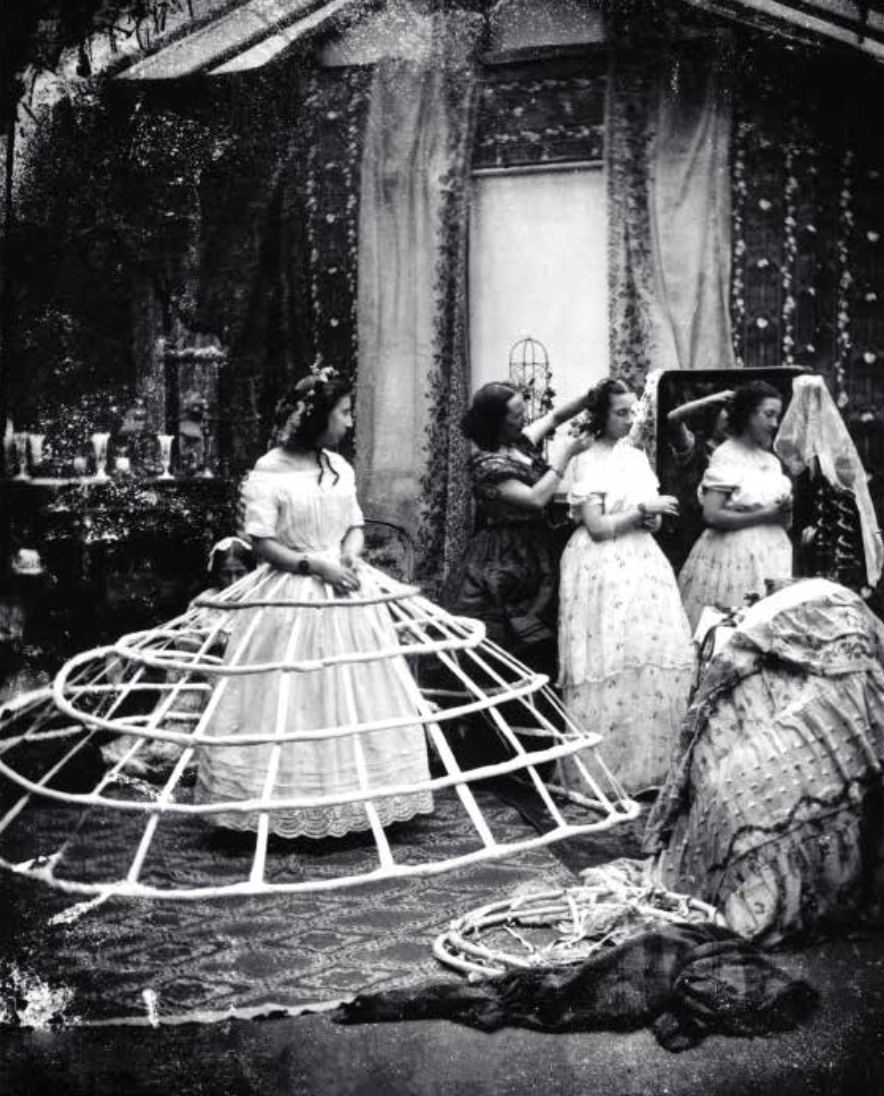
In 17th century Europe, baroque was fashion.
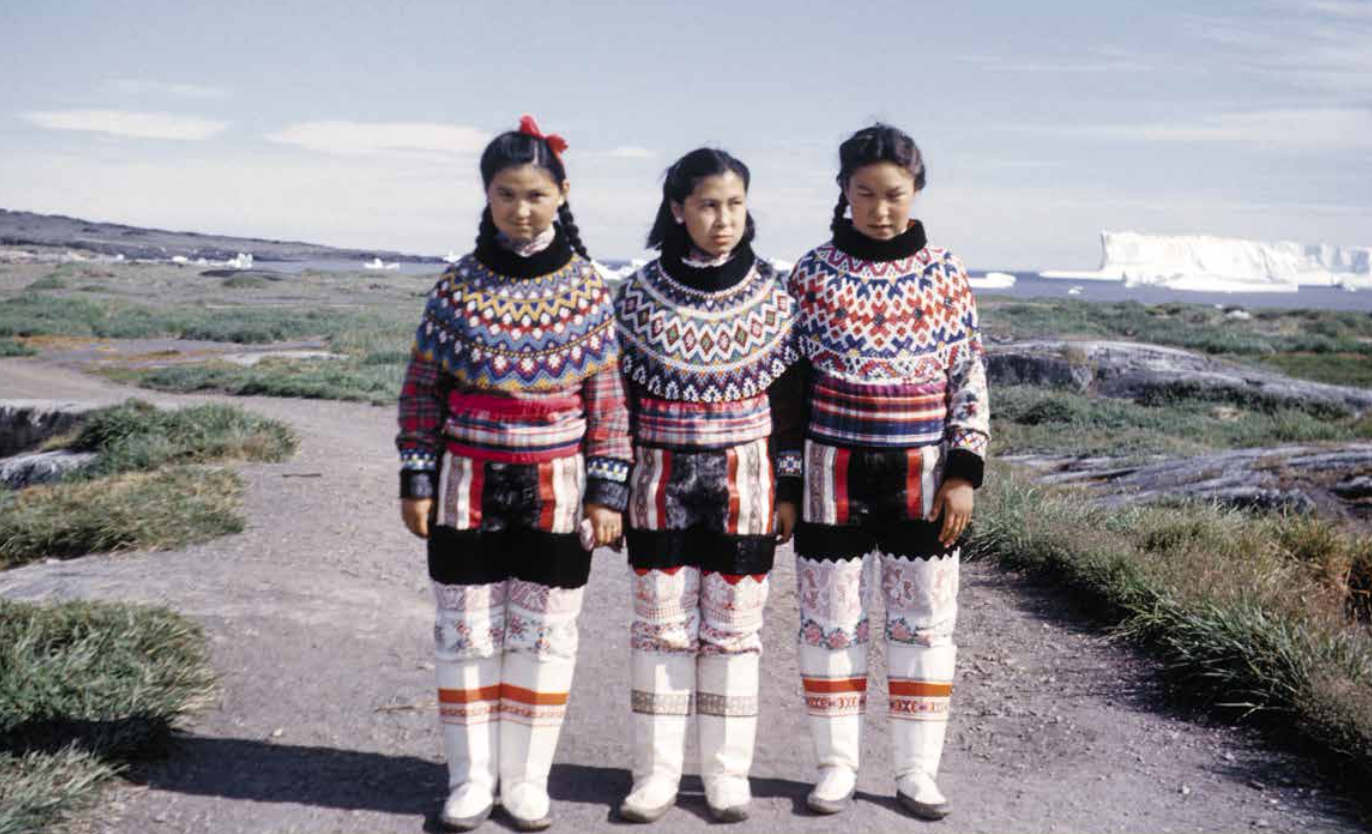
The colourful glass beads became fashion in Greenland.
-
What is the construction around the woman made of?
-
The girls in the picture are wearing national dresses. Do you know other countries where national dresses are used?
Music is a language everyone understands.
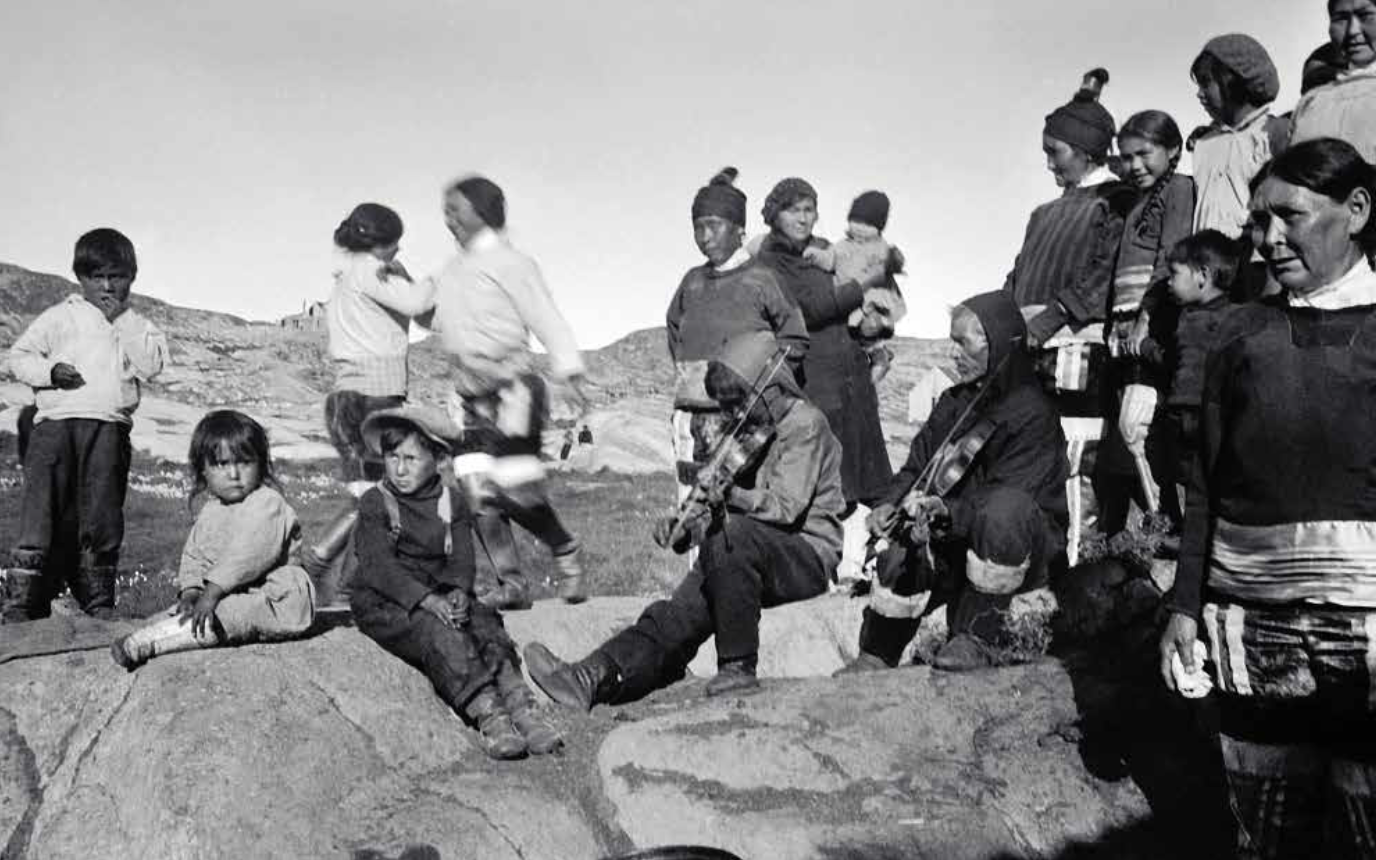
The Greenlandic polka kalattuut was inspired by the European polka.
This is how kalattuut is danced.
When you have seen the dance a few times, try if you can join dancing.
Take a photo of your dance and insert it.
Between 1670 and 1750, around 100-200 ships a year sailed from Europe to the Disko Bay.
They were particularly interested in the fat blubber layer of the bowhead whale. They brought the blubber home where it was melted and used for lighting the streets of cities. Profitable business for the owners of the ships.
The whales were close to extinction, seriously affecting the life of the Inuit.
The whalers traded furs, walrus and narwhal tusks and food from the Inuit.
In exchange Inuit got glass beads, copper pans, felt hats, sewing needles, and cotton trousers.
-
What consequences did it have for the Inuit that the whale population was close to extinction?
-
Why were the whalers especially interested in tusks of walrus and narwhal?
-
Who gained most from trading – the Europeans or the Inuit?
In 17th century Europe, baroque fashion was at its
zenith with skirts that could not be wide enough. Ribs of whalebones were more flexible than those of metal so they became very popular.
In Greenland the colourful glass beads were sewn onto women’s dresses. They are still used in the women’s festive and national dress.
-
Besides ribs in skirts what were baleens used for? See page 27 in the book.
-
The girls in the picture are wearing national dresses. Do you know other countries where national dresses are used?
Find pictures and insert them.
Inuit and European music flowed together at festivities
and dances. This engendered good relations
which was no doubt also good for exchange of goods
The Greenlandic kalattuut was inspired by the European polka.
This is how kalattuut is danced.
When you have seen the dance a few times, try if you can join dancing.
Take a photo or a video of your dance and insert it.
The European whalers came to Greenland between 1670 and 1750.
Yet another cultural meeting took place but this time between Inuit and the European whalers.
-
Blubber from whales was among other things used for impregnation – what is that?
-
What happened to the population of whales during that period?
-
What were the consequences of the declining whale population for the livelihood of the Inuit?
Here you see the Greenlandic national dress.
The glass beads on the collar are inspired from those the Europeans brought with them.
This cultural exchange also affected the European fashion.
-
Write an essay with the title: A baroque fashion phenomenon created with baleens.
-
How did both the Inuit and the European whalers benefit from their cultural meeting?
In the meeting between Inuit and European whalers music often was central.
Their music flowed together in this meeting, creating good relations.
-
How can kalattuut be described? Search for information and videos on the Internet.
-
What instruments did the Europeans bring to Greenland?
-
How did festivities and dancing facilitate exchanges?
The European whalers came to Greenland between 1670 and 1750.
Yet another cultural meeting took place but this time between Inuit and the European whalers.
-
Blubber from whales was among other things used for impregnation – what is that?
-
What happened to the population of whales during that period?
-
What were the consequences of the declining whale population for the livelihood of the Inuit?
Here you see the Greenlandic national dress.
The glass beads on the collar are inspired from those the Europeans brought with them.
This cultural exchange also affected the European fashion.
-
Write an essay with the title: A baroque fashion phenomenon created with baleens.
-
How did both the Inuit and the European whalers benefit from their cultural meeting?
In the meeting between Inuit and European whalers music often was central.
Their music flowed together in this meeting, creating good relations.
-
How can kalattuut be described? Search for information and videos on the Internet.
-
What instruments did the Europeans bring to Greenland?
-
How did festivities and dancing facilitate exchanges?
Partners


