ABOUT THE MATERIAL
- Hunting in an umiak
- Sassat – beluga whale and narwhal hunting on the sea ice
- The uses of whales
-
You solve the tasks by using
- Text
- Audio
- Drawing tool
- Images
In the book you can find more information on the subject.
Umiak was usually rowed by women and used as a means of transport.
During whale hunting they were rowed by men.
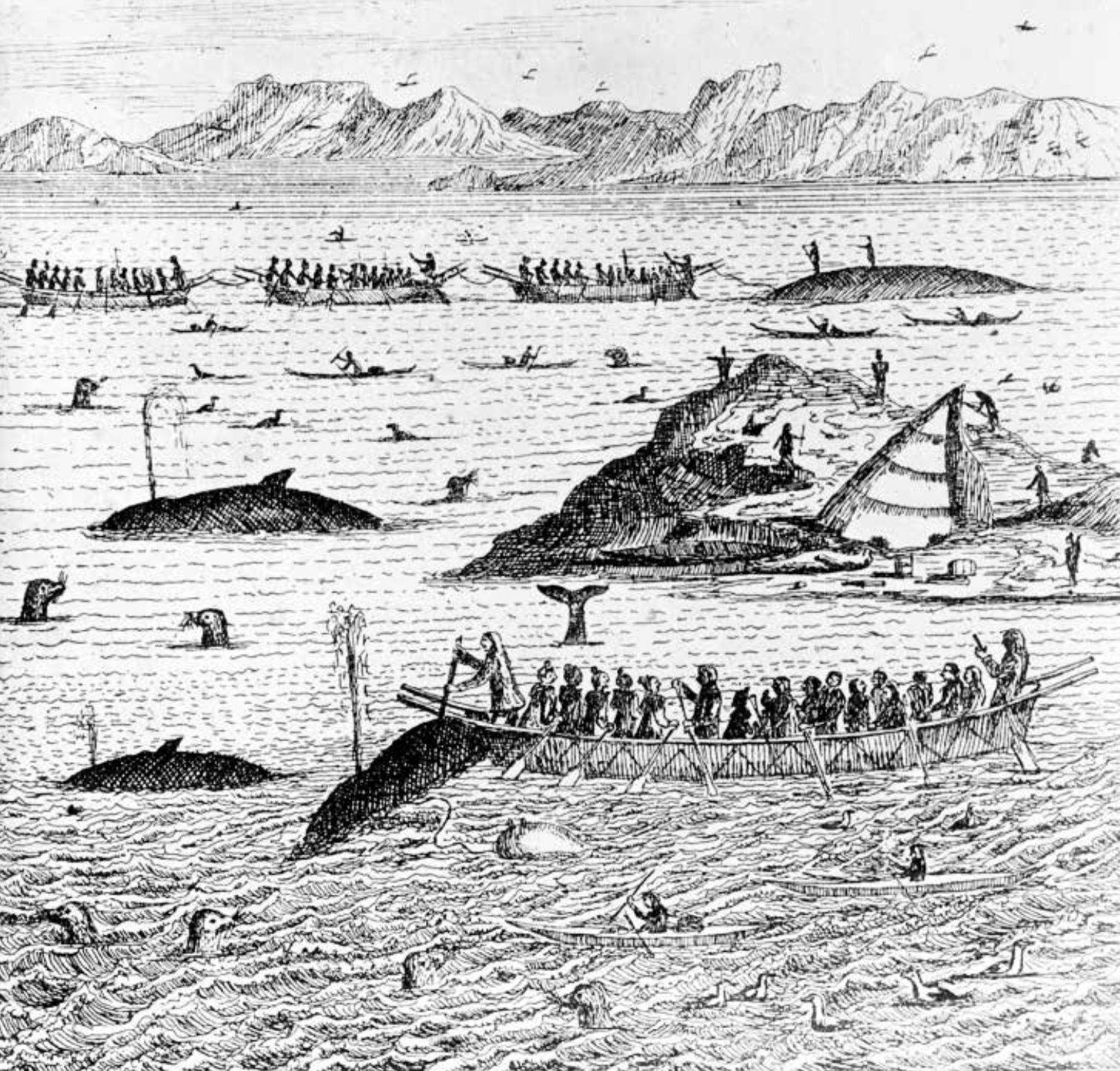
The drawing shows hunting of whales and seals 100 years ago. Write, draw or record a story where you participate in a hunt in either umiak or kayak.
My story:
When the fjord freezes over quickly narwhals and beluga whales may be unable to make it to the open sea.
They then gather in holes in the ice. Here they break the thin ice when they need to breathe.
Several hundred whales can be caught in such a hole. This is called a sassat. Once the hunt begins it is a dramatic bloodshed.
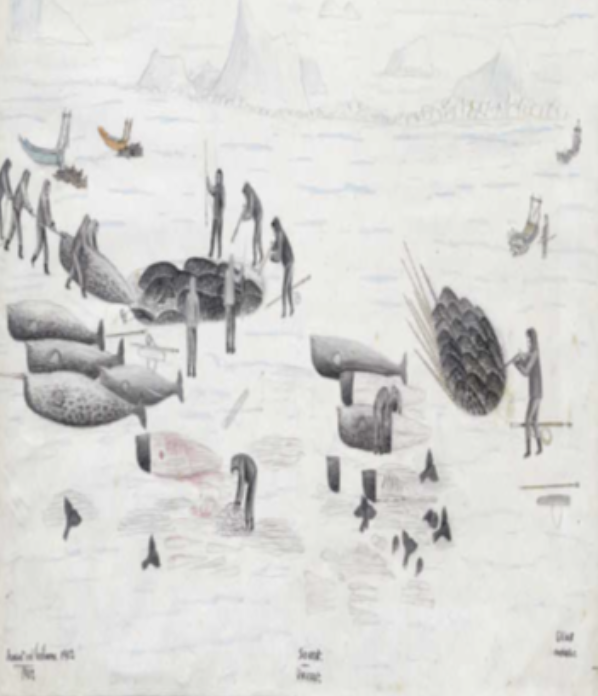
Narwhals caught in a hole in the ice (sassat) at Qeqertarsuaq, 1912
Today sassat occurs rarely. Due to climate changes the Icefjord does not freeze over that often, but it happens.
-
What does sassat mean?
-
With what did the hunters kill the whales? See p. 40 in the book.
-
In the next slide you see a picture of a narwhal. Guess how long it is.
My guess:
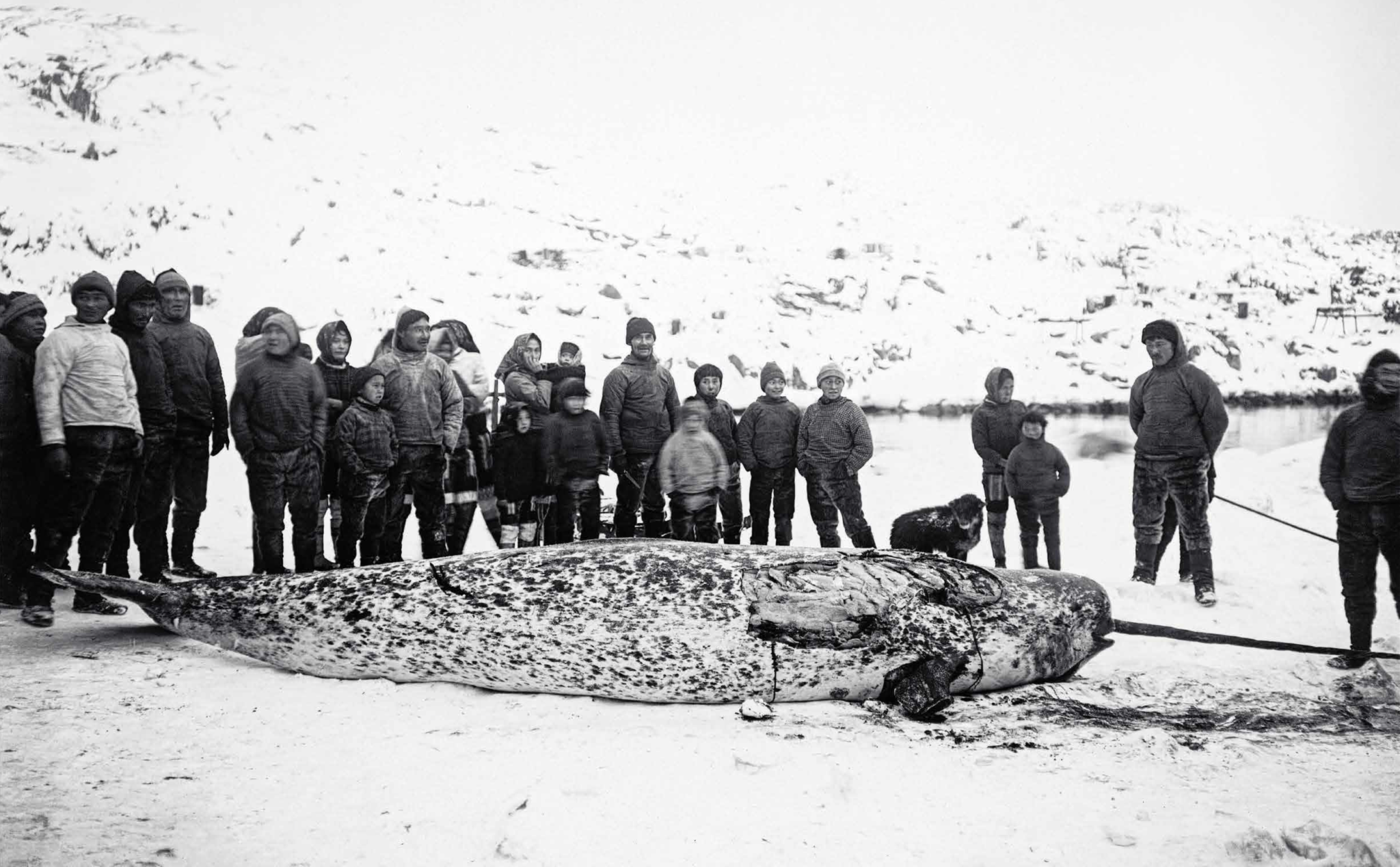
For more than four thousand years whales have been hunted in the Disko Bay.
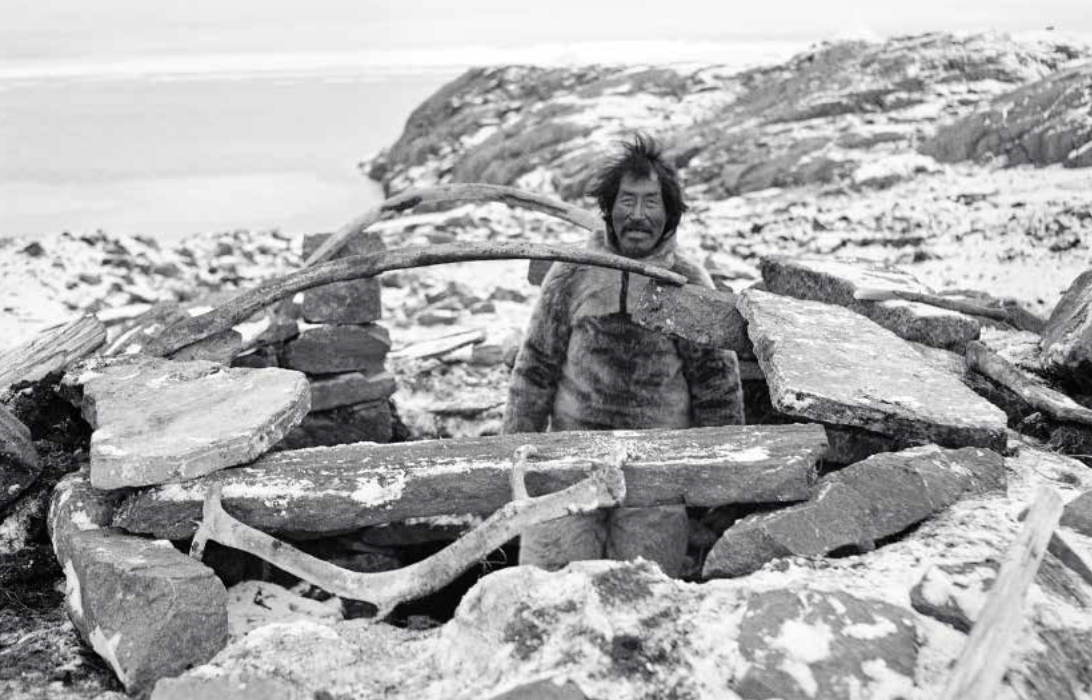
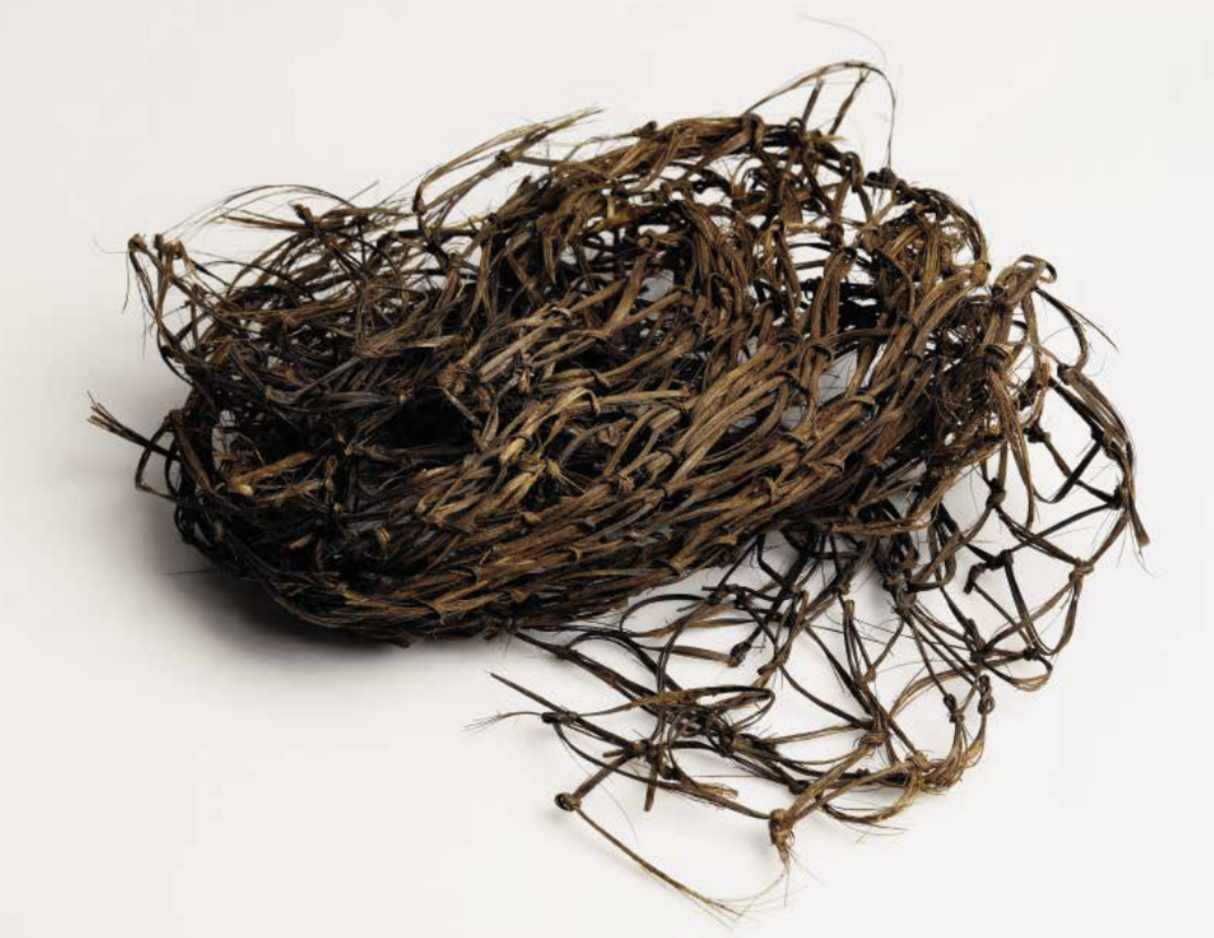
Everything of the whale was utilised. The meat was eaten The bones were used for tools and roof structures of winter houses. The baleens were used as fishing lines and nets. The blubber, train oil, was used for heating and lighting.
Whalers from Europe came to the Disko Bay in the 17th century. The train oil from the whales they sold on their return. It was used to light the streets of European cities.
-
What tools were made from whalebones?
-
Make a list of whales living at Greenland. Find information here: whales.
My list:
-
The man in the picture is building his winter house. What materials is he using?
Answer:
For the Inuit whale hunting was an important part of their life, since the whale’s meat and blubber could ensure the survival of the settlement for a whole season.
The whales were hunted from umiaks rowed by men. When used as a means of transport the women rowed. Since the 1920s more modern types of boat have been used during whale hunting.
The drawing shows hunting of whales and seals 100 years ago. Draw an umiak and provide a caption. Your text must explain if the boat is rowed by men or women and why.
My drawing:
When the fjord freezes over quickly narwhals and beluga whales may be unable to make it to the open sea.
They then gather in holes in the ice. Here they break the thin ice when they need to breathe.
Several hundred whales can be caught in such a hole. This is called a sassat. Once the hunt begins it is a dramatic bloodshed.
Narwhals caught in a hole in the ice (sassat) at Qeqertarsuaq, 1912
Today sassat occurs rarely. Due to climate changes the Icefjord does not freeze over that often, but it happens.
-
What does the Greenlandic word sassat mean? Get help at p. 41 in the book.
-
Explain why sassat occurs more seldom today than in the past.
-
In the next slide you see a picture of a narwhal. Guess how long it is.
For more than four thousand years whales have been hunted in the Disko Bay.
Everything of the whale was utilised. The meat was eaten. The bones were used for tools and roof structures of winter houses. The baleens were used as fishing lines and nets. The blubber, train oil, was used for heating and lighting.
Whalers from Europe came to the Disko Bay in the 17th century. The train oil from the whales they sold on their return. It was used to light the streets of European cities.
-
What tools were made from whalebones?
-
Make a list of whales living at Greenland. Find information here: whales.
-
The man in the picture is building his winter house. What materials does he need to finish the house?
To Inuit whale hunting was very important as it could ensure the survival of the settlement for a whole season.
In the picture you see whale hunting from an umiak. It was built to navigate the Icefjord filled with ice floes.
-
What is an umiak, and what was it normally used for?
-
When was the umiak replaced by modern types of boat?
-
On page 36 is a picture of a “springpels” – and that is?
When the fjord freezes over fast the whales may not be in time to reach open sea. They then gather in holes in the ice that they keep open to breathe.
This makes them easy to catch, and there can be hundreds of whales at one place when this happens.
-
What does “sassat” mean, and why did the phenomenon get just that name?
-
Why is it seldom that sassat occurs today?
-
Which hunting tool is used when the whales are gathered in the hole in the ice?
When a whale was caught it was fully used. Meat, bones, baleens and train oil – everything could be used.
Whale hunting goes back 4,500 years, and whales always were an important game animal.
For food as well as material for hunting tools and building constructions.
-
What do you see in this picture (p. 44 in the book)?
-
What did the European whalers use the whales for?
-
On pages 42-43 is a picture of a whale that has been caught. What kind of whale is it?
To Inuit whale hunting was very important as it could ensure the survival of the settlement for a whole season.
In the picture you see whale hunting from an umiak. It was built to navigate the Icefjord filled with ice floes.
-
Who usually uses an umiak – and for what?
-
What whales live in the Greenlandic waters?
-
On page 36 is a picture of a “springpels”. When was the springpels used?
When the fjord freezes over fast the whales may not be in time to reach open sea. They then gather in holes in the ice that they keep open to breathe.
This makes them easy to catch, and there can be hundreds of whales at one place when this happens.
-
What does “sassat” mean, and why did the phenomenon get just that name?
-
How can climate changes cause sassat to occur seldom today?
-
There are strict rules for the export of narwhal from Greenland. Why?
When a whale was caught it was fully used. Meat, bones, baleens and train oil – everything could be used.
Whale hunting goes back 4,500 years, and whales always were an important game animal.
-
On pages 42-43 is a picture of a whale that has been caught. What kind of whale is it?
-
The whales were fully used – for what?
-
The European whalers met the Thule population, and they often exchanged goods – what goods?
Partners


