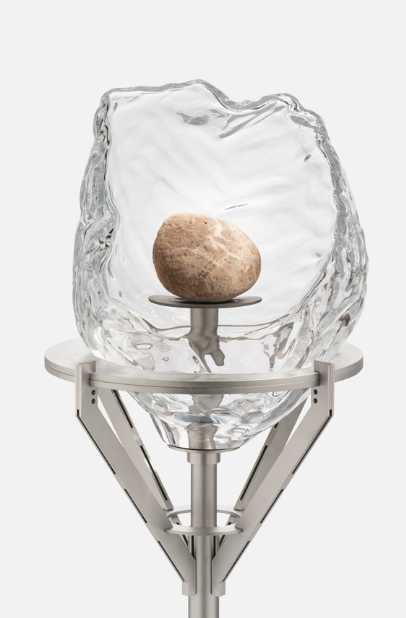
ABOUT THE MATERIAL
- Bullet-nose blocks
- The ice flow is a powerful plane
- Melting and snowfall
-
You solve the tasks by using
- Text
- Audio
- Drawing tool
- Images
In the book you can find more information on the subject.
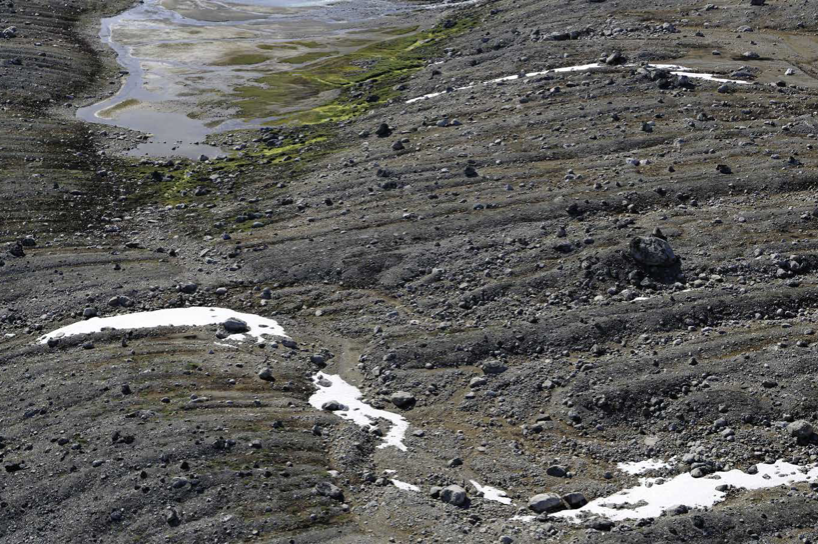
A bullet-nose block gives information about glaciers past and present. They were dragged by the ice across the ground. They lie parallel and have a pointed front, like a nose,
You can determine in what direction the ice moved by looking at the stones and blocks. Even thousands of years after the ice has melted.
-
Why are they called bullet-nose blocks?
-
The stone blocks have striations. What are they called? Find answer on page 44 in the book.
-
How would you describe the picture?
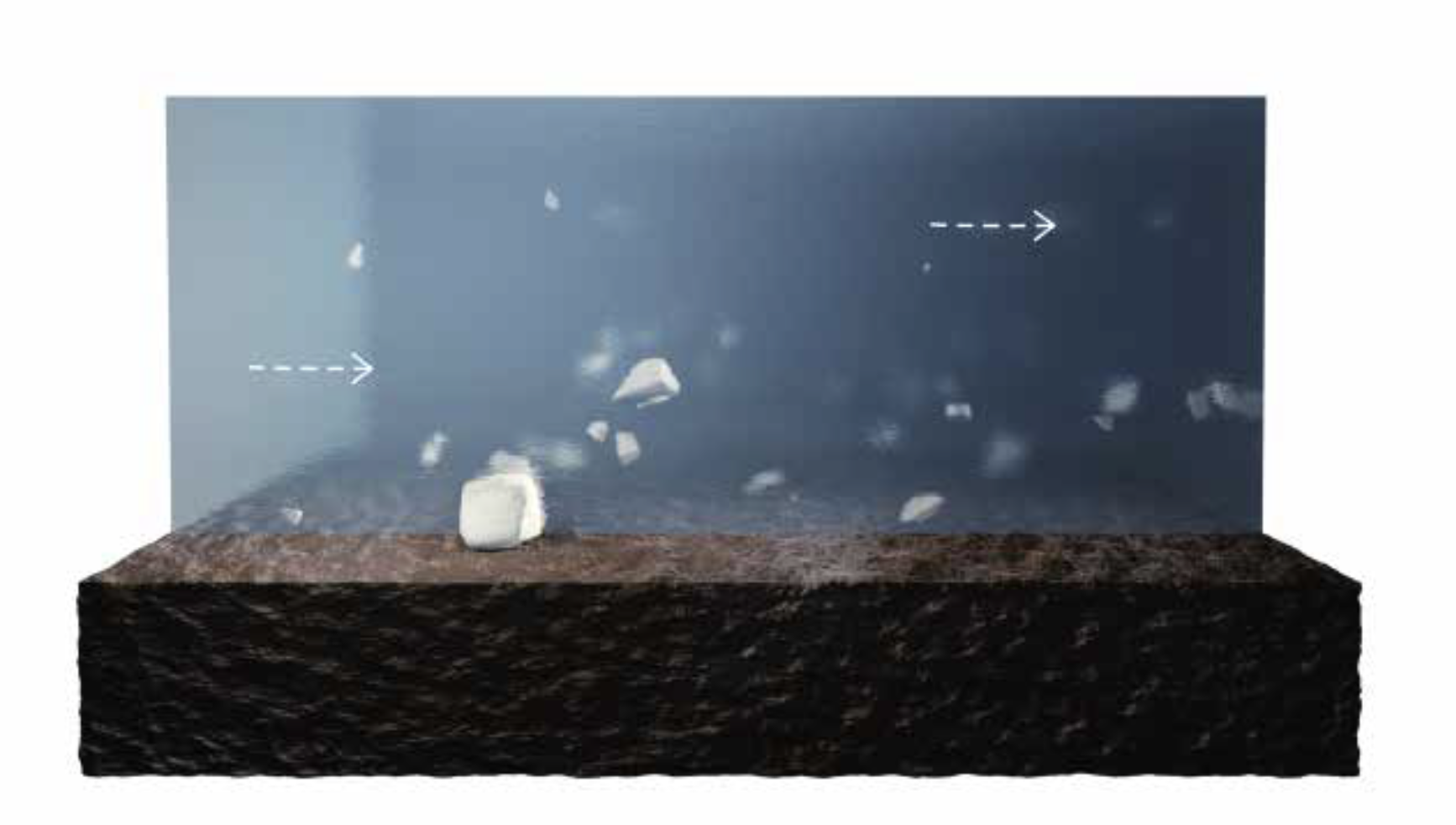
Why does the ice flow work like a powerful plane?
If a lot of snow falls and the weather is cold, the ice sheet will grow.
In recent years more of the ice has melted than has been added with new snow.
This makes the global sea level rise.
If all of the ice sheet melted the global sea level would rise by 7.2 metres.
The ice sheet is covering less and less of Greenland. This is caused by climate change. The weather is becoming warmer and warmer.
Can something be done to stop the climate changes?
The bullet-nose blocks contain important information about glaciers past and present. They were dragged by the ice across the ground so that they lie parallel at the melting of the ice.
This makes it possible to determine in what direction the ice moved – even thousands of years after the ice had melted.
-
Why is the stone called a bullet-nose block?
-
The stone blocks have striations. What are they called? Find answer on page 44 in the book.
-
How would you describe the picture?
The ice sheet is always on the move and contains such enormous force that it can crush even the largest boulders to fine gravel on its way to the coast.
Here you see a section of the ice mass moving over the crust of the ground. On page 46 in the book there are three more sections.
Explain what makes the ice move and why it works as a powerful plane. Here you will need your earlier work with slide 6.
The size of the ice sheet depends on two thing:
- how much snow falls on Greenland
- how much ice melts from the surface of the ice and calves at the glacier front
In recent years more of the ice has melted than has been added with new snow.
This makes the global sea level rise.
If all of the ice sheet melted the global sea level would rise by 7.2 metres.
The ice sheet is covering less and less of Greenland. This is caused by climate change. The weather is becoming warmer and warmer.
Can something be done to stop the climate changes?
Bullet-nose blocks are dragged by the ice and deposited when the ice melts.
Bullet-nose blocks can be different kinds of rock and contain important information about glaciers.
-
What can a bullet-nose block reveal?
-
What do you see in the picture on page 44?
-
Why are they called bullet-nose blocks?
This model no. 4 is one of the models on page 46. There is no explaining text to the models. A plausible text to no. 4 could be this:
This model shows how the ice has crushed the large boulders.
- Write a short text to the four models on page 46 like the one here explaining no. 4.
- How does the ice affect the landscape below it?
-
Could the ice flow be compared to other tools than a plane?
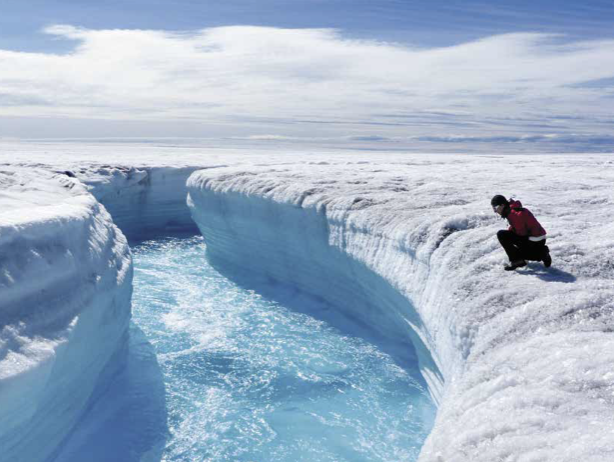
In the picture you see one of the rivers created by the meltwater on its way to the sea.
The meltwater gathers to form rivers, cutting deep into the ice.
- Which two factors determine the size of the ice sheet?
- Why has there in recent years been more melting of ice than addition of new snow?
-
How much would the global sea level rise if all of the ice sheet melted?
Bullet-nose blocks are dragged by the ice and deposited when the ice melts.
Bullet-nose blocks can be different kinds of rock and contain important information about glaciers.
-
What do you see in the picture on page 44?
-
What can a bullet-nose block reveal?
-
Why is it of interest to examine the direction of the ice thousands of years after it melted away?
This model no. 4 is one of the models on page 46. There is no explaining text to the models. A plausible text to no. 4 could be this:
This model shows how the ice has crushed the large boulders.
-
Write a short text to the four models on page 46 like the one here explaining no. 4.
-
What do you see on pages 48-49?
-
On page 13 is a model visualizing the speed of the ice flows in Greenland. Compare the four glaciers shown.
In the picture you see one of the rivers created by the meltwater on its way to the sea.
The meltwater gathers to form rivers, cutting deep into the ice.
-
What happens when the melting of ice exceeds the addition of snow?
-
Why has there in recent years been more melting of ice than addition of new snow?
-
What countries would be affected if all of the ice sheet melted?
Partners


