CALVING
ABOUT THE MATERIAL
- Why does Sermeq Kujalleq calve?
- The journey of an iceberg through the Icefjord
- 10% of the icebergs from Greenland’s ice sheet calve from Sermeq Kujalleq
- Calving creates huge waves
-
You solve the tasks by using
- Text
- Audio
- Drawing tool
- Images
In the book you can find more information on the subject.
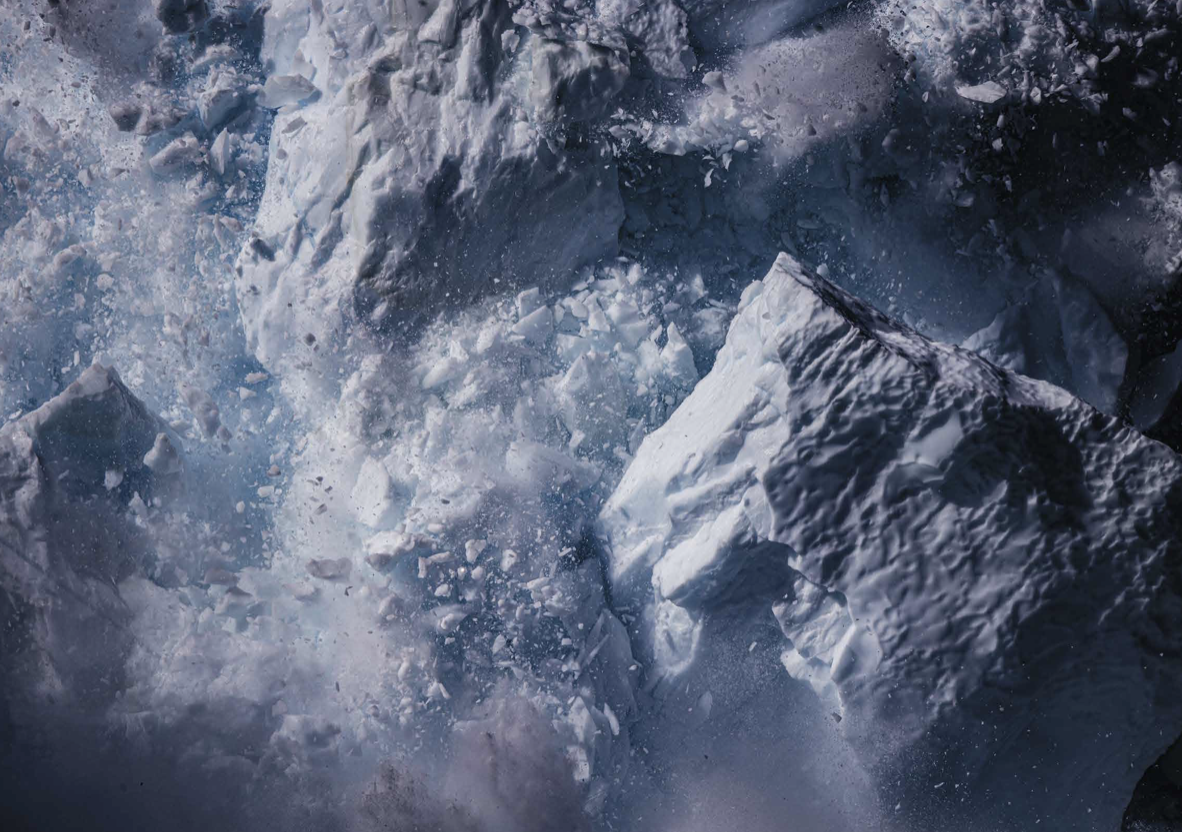
When it snows, the glacier grows. The snow layer puts pressure on the lower ice, and the ice moves towards the coast. In summer when the water gets warmer, the glacier is hollowed at the bottom, and large icebergs break off from the front.
In winter smaller ice floes break off.
-
See the film on slide 10 once more. What colours do you see in the ice breaking off the glacier?
-
When the ice breaks off the glacier front you say that it calves.
What animals calve and what does it mean?
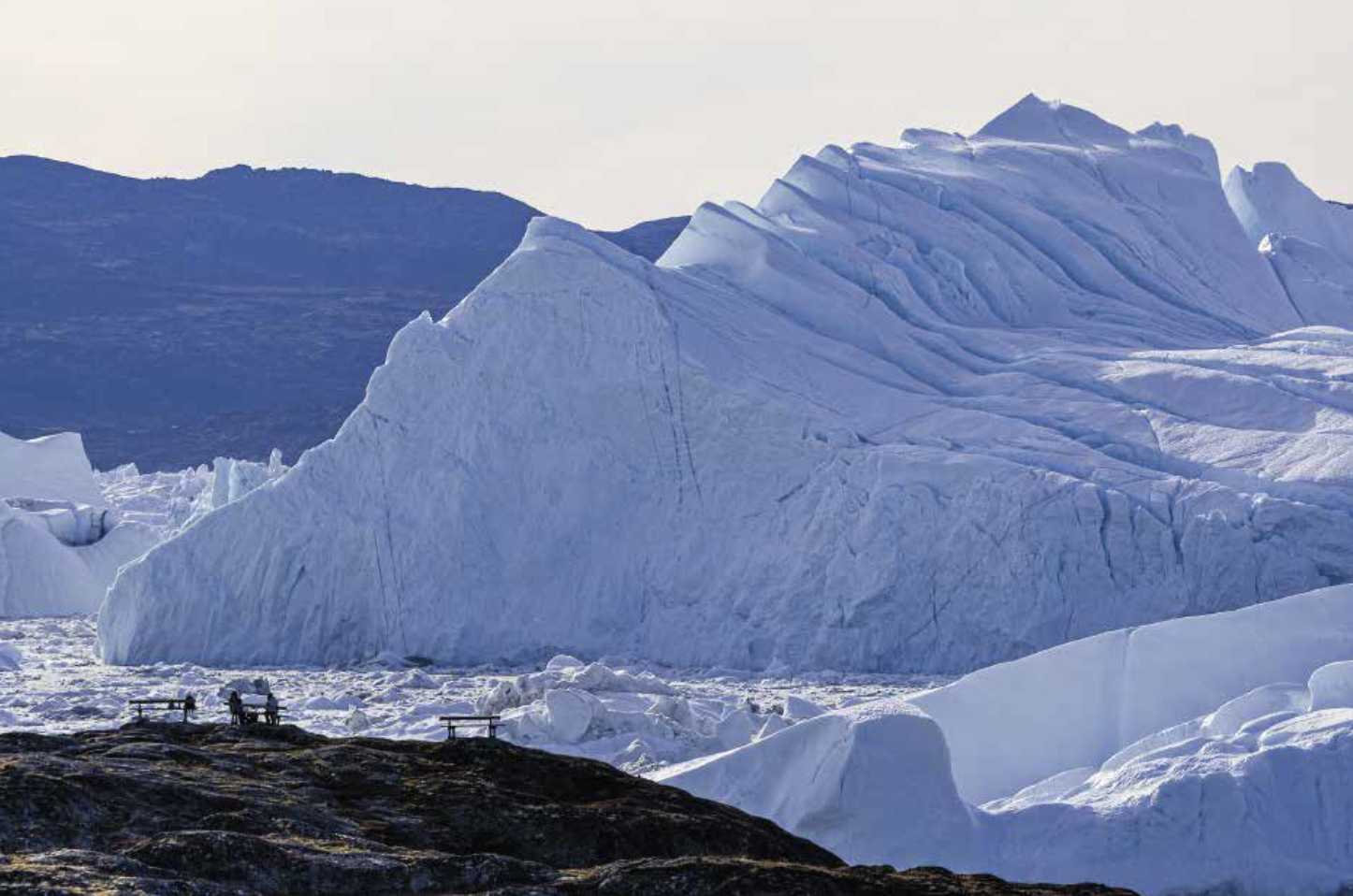
Some icebergs are so big that they get stranded at the bottom of the Icefjord.
Many icebergs can pile up. They do not drift along until being pressured by new icebergs or having melted enough to get free of the bottom.
-
The two persons on the bench have been to the Icefjord Centre. What might they be talking about?
The dialogue:
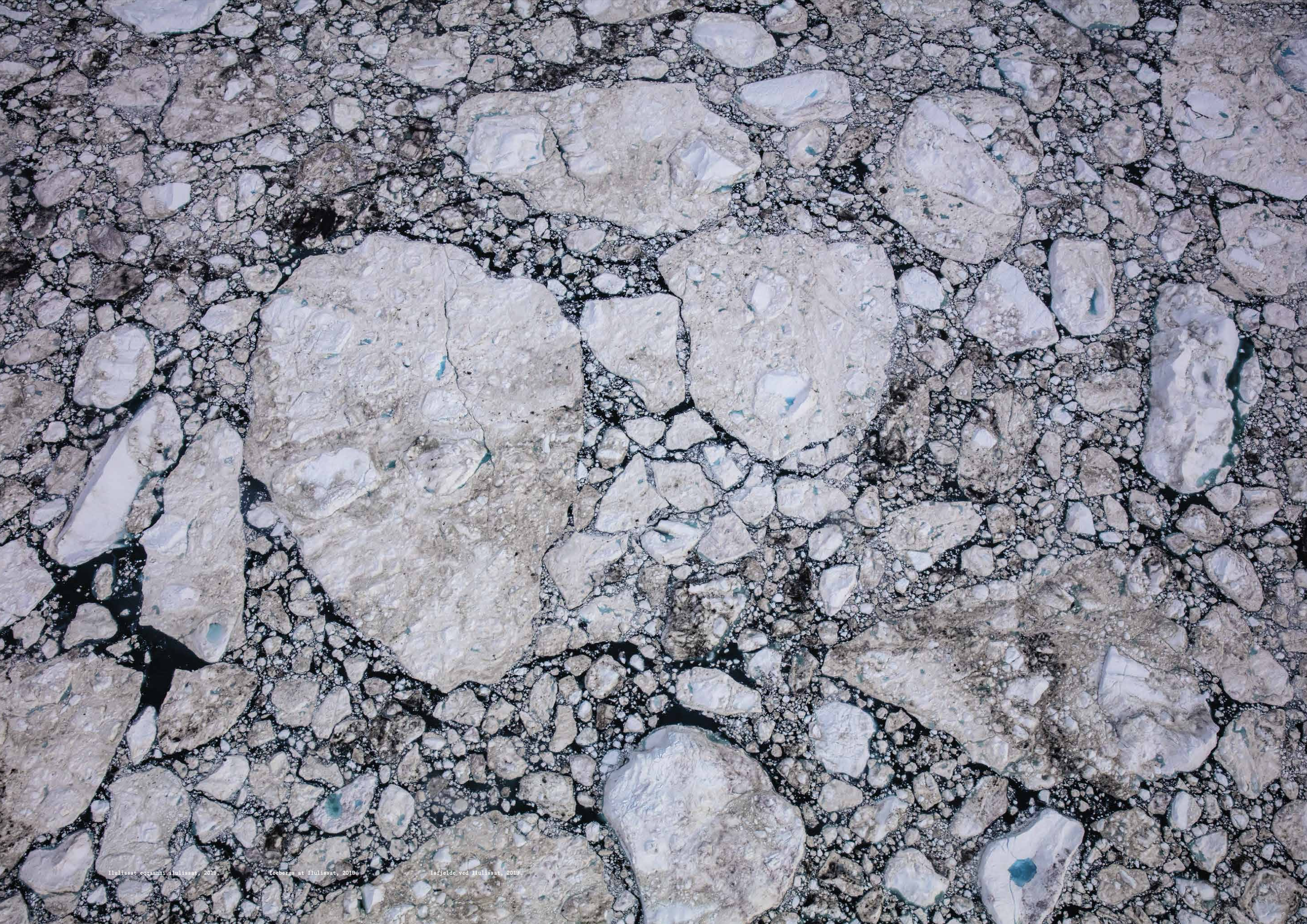
Here you see an aerial photograph of the icebergs at Ilulissat 2019. They come from the glacier Sermeq Kujalleq.
The glacier calves about 40 to 50 km³ each year.
It is the fastest in the world. In summer it moves around 40 metres a day.
-
On the top of the icebergs something blue is seen. What is that?
-
How much of the icebergs can be seen above the water?
When the glacier calves, large amounts of ice fall into the sea, which can create huge waves of enormous force.
As it is not known exactly when the glacier calves or an iceberg turns around, it can be dangerous to be on the sea or at the coast in Ilulissat.
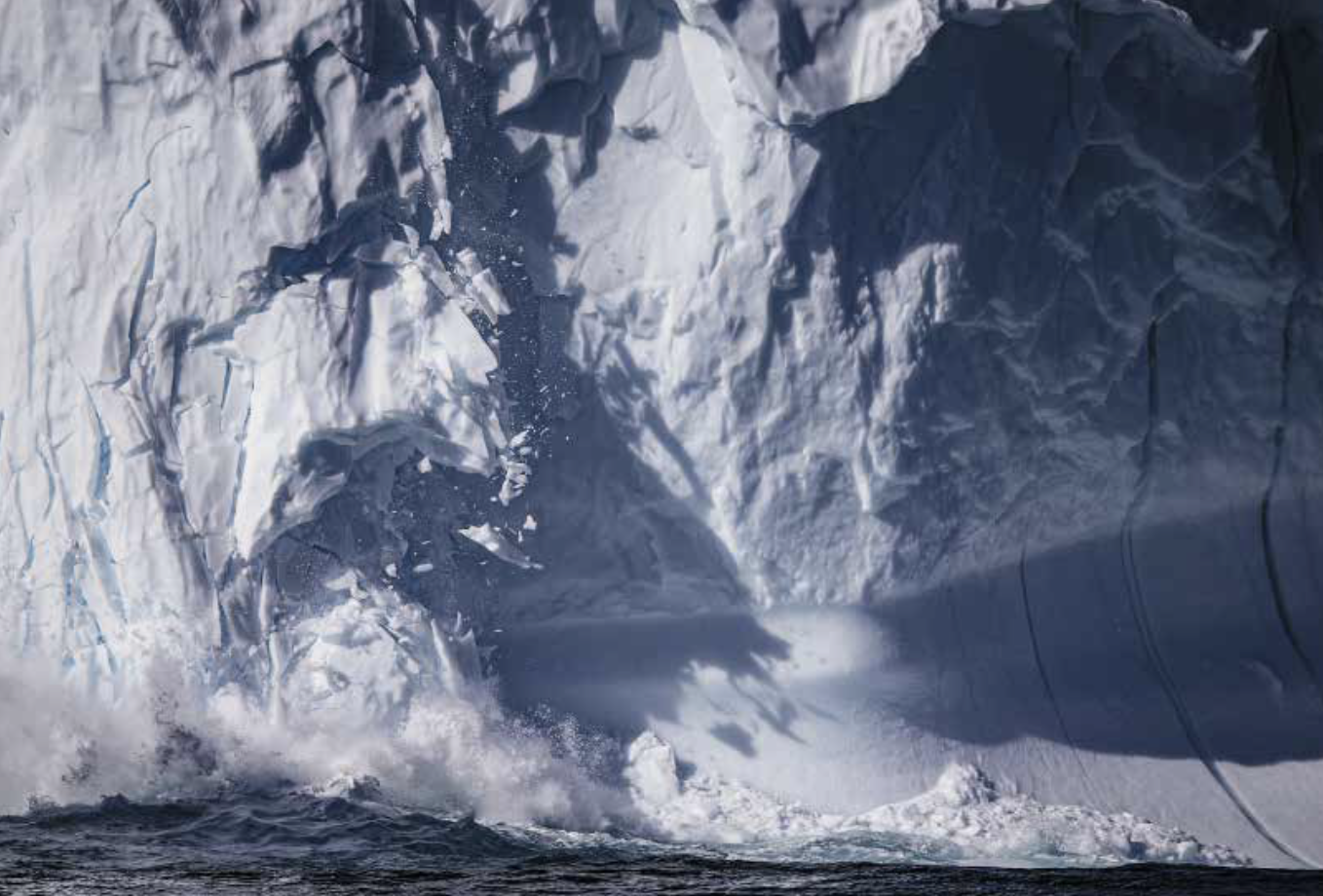
Write or record a fairy tale with the title When I and my friend encountered a giant wave.
My story:
There are several causes for the Sermeq Kujalleq glacier calving.
Partly because of gravity. With new layers of snow the glacier is increasing and this creates a pressure on the bottommost ice, causing it to move outwards.
Partly because of temperature changes. In summer when the water gets warmer, the glacier is hollowed from the bottom, and large icebergs break off the front.
All the time pieces break off the glacier front, but it is only in summer that the large icebergs are calved.
-
See the film on slide 10 once more. What colours do you see in the ice breaking off the glacier?
-
Where are the different type of ice seen in the movie formed?
The Icefjord is at places more than 1 km deep, but at the mouth to the Disko Bay is a moraine. It was formed thousands of years ago when the glacier front was there.
Many of the big icebergs can pile up there. They do not drift along until being pressured by new icebergs or having melted enough to get free of the bottom.
The two persons on the bench have been to the Icefjord Centre. Write a dialogue where they talk about the centre and about the journey of the iceberg through the Icefjord.
Dialogue:
Here you see an aerial photograph of the icebergs at Ilulissat 2019. They come from the glacier Sermeq Kujalleq.
The glacier calves about 40 to 50 km³ each year.
It is one of the fastest in the world. In summer it moves around 40 metres a day.
-
On the top of the icebergs something blue is seen. What is that?
-
1 m³ contains 1000 liters of water. How many liters does 1 km³ contain?
-
And how many liters do 40 km³ contain?
When the glacier calves, large amounts of ice fall into the sea, which can create huge waves of enormous force.
As it is not known exactly when the glacier calves or an iceberg turns around, it can be dangerous to be on the sea or at the coast in Ilulissat.
When a glacier calves, icebergs of different sizes break off from the front.
The icebergs float with the ocean streams into the world.
-
How is the pressure created that makes the bottommost ice move?
-
What is high tide and low tide?
-
Do you know the concept calving from elsewhere?
The icebergs calved from the glacier Sermeq Kujalleq travel on through the Icefjord.
In the picture you see an iceberg on its way through the Icefjord.
-
At the mouth of the Icefjord is a moraine. What is a moraine?
-
How do the icebergs get past the moraine?
-
What does the model on page 46 show?
Here you see an aerial photograph of the icebergs at Ilulissat 2019.
The glacier calves about 40 to 50 km³ each year.
It is one of the fastest in the world.
-
If the glacier moves 40 metres a day, how much does it move in a year?
-
If the 70 tonnes of ice floating through the Icefjord each day were melted, it could cover the yearly watersupply of the USA.
Could all this ice be used for something somehow? -
Sermeq Kujalleq is the fastest glacier on the northern hemisphere. What other glaciers are there? Use the Internet.
As it is not known exactly when the glacier calves or an iceberg turns around, it can be dangerous to be on the sea or at the coast in Ilulissat.
-
On pages 54-55 are four pictures with a kayak. What do they show?
-
What is a tsunami?
-
Are there other places in the world where tsunamies may hit?
When a glacier calves, icebergs of different sizes break off from the front.
The icebergs float with the ocean currents into the world.
-
How can gravity affect calving?
-
How can temperature changes affect calving?
-
Temperature changes can be natural or manmade. Describe the difference.
The icebergs calved from the glacier Sermeq Kujalleq travel on through the Icefjord.
In the picture you see an iceberg on its way through the Icefjord.
-
At the mouth of the Icefjord is a moraine. How was that formed and how high is it?
-
In the model on page 46 are six technical concepts about the ice. Explain each concept.
-
Here are two persons on a bench at the Icefjord (p. 47). Write a poem based on this picture.
Your poem:
Here you see an aerial photograph of the icebergs at Ilulissat 2019.
The glacier calves about 40 to 50 km³ each year.
It is one of the fastest in the world.
-
If 10% of the icebergs from Greenland amount to 50 km³, then how many km³ are 100%?
-
Water is a precious resource. Would it be possible to melt the water from the ice sheet and use it? Why / why not?
-
Sermeq Kujalleq is the fastest glacier on the northern hemisphere. What other glaciers are there? Use the Internet.
As it is not known exactly when the glacier calves or an iceberg turns around, it can be dangerous to be on the sea or at the coast in Ilulissat.
-
On pages 54-55 are four pictures with a kayak. Write a story based on these pictures.
-
Are there other places in the world where tsunamies have hit? Where and when?
-
Are there any other natural phenomena, dangerous to humans?
Partners


